
Common Fish Identification Chart: 70 Fish, One Clue Each
Compiled from state wildlife agency pages. Reviewed November 3, 2026.
One recognition clue for each fish, taken from its playbook. Features vary with age, season and water, and a photo from the side in good light shows the most. For fish that are easy to mix up, the look-alike guides line up the differences.
Look-alike guides · How to identify a fish from a photo
Jump to: Freshwater fish (50) · Saltwater fish (16) · Fish that live in both fresh and salt water (4) · Fish that get mixed up
Narrow it down in five checks
- Freshwater or saltwater? Pick the matching section below, or the one for fish that live in both.
- Body shape: long and slim, deep and round, flat, or eel-like.
- Mouth and whiskers: size, direction, and barbels on the chin or around the mouth.
- Fins and tail: one back fin or two, spines or soft rays, and the tail shape and any spot at its base.
- Markings last. Color changes with light, water and season, so use spots, bars and stripes only to confirm.
Freshwater fish
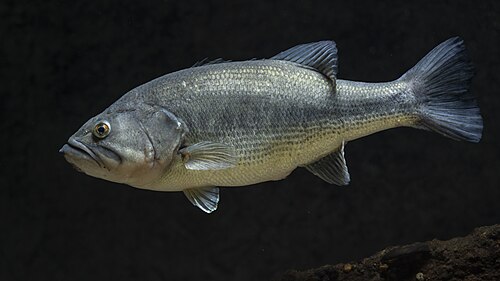
Largemouth Bass
Micropterus salmoides
Green to olive back, with a broad dark stripe along the middle of the side (it can be unclear in big adults and in murky water).
How to recognize it · Largemouth vs Smallmouth vs Spotted Bass
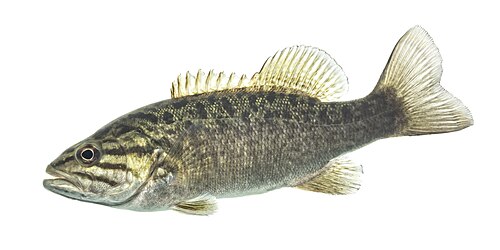
Smallmouth Bass
Micropterus dolomieu
A slender, streamlined bass. Iowa describes a golden-green body with faint olive blotches and olive-green bars radiating back from the eye.
How to recognize it · Largemouth vs Smallmouth vs Spotted Bass
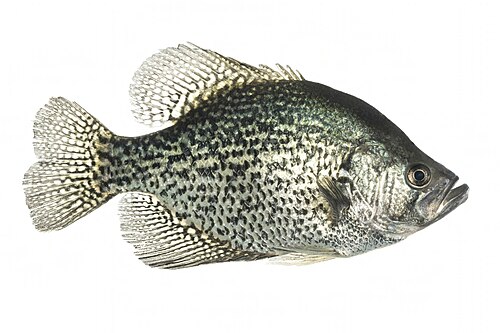
Crappie
Pomoxis nigromaculatus
Black crappie have no distinct vertical bars, a dark back with many green or blackish spots spread unevenly over the sides, and an upper jaw that extends past the middle of the eye (Iowa DNR).
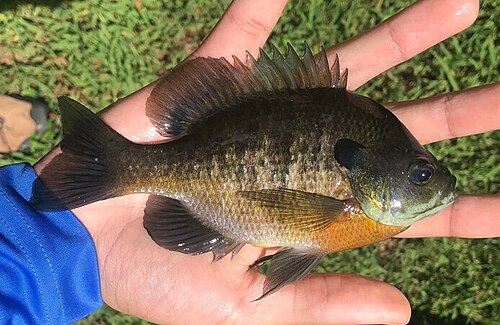
Bluegill
Lepomis macrochirus
A deep, slab-sided sunfish with a small mouth. The upper jaw does not reach the front of the eye when the mouth is closed (Iowa DNR).
How to recognize it · Bluegill vs Redear vs Pumpkinseed vs Green Sunfish
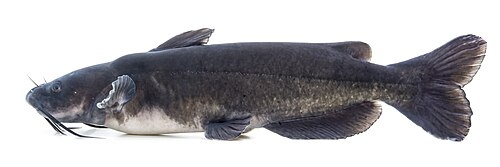
Channel Catfish
Ictalurus punctatus
A deeply forked tail, black spots on the back and sides, and a gray to slate-blue body, often olive with a yellow sheen (North Carolina).
How to recognize it · Channel vs Blue vs Flathead Catfish (and Bullheads)
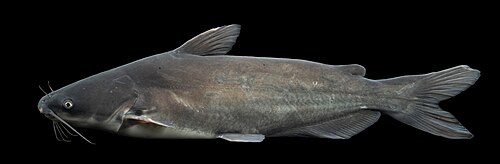
Blue Catfish
Ictalurus furcatus
A forked tail, like a channel catfish, and an anal fin that is straight across the bottom (Oklahoma).
How to recognize it · Channel vs Blue vs Flathead Catfish (and Bullheads)
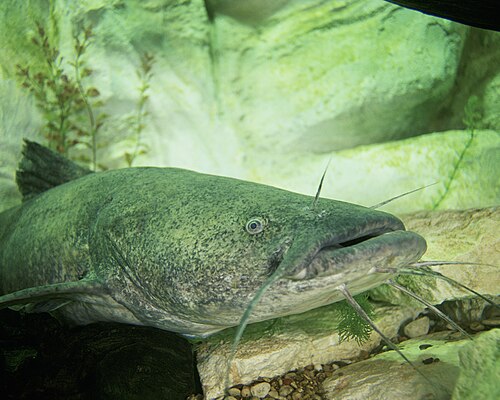
Flathead Catfish
Pylodictis olivaris
A broad, flat head with the lower jaw protruding beyond the upper (North Carolina).
How to recognize it · Channel vs Blue vs Flathead Catfish (and Bullheads)
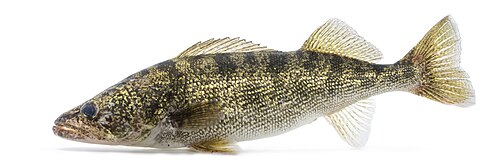
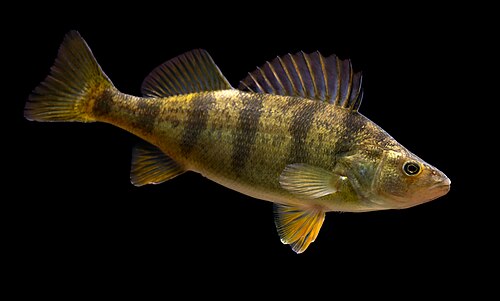
Yellow Perch
Perca flavescens
Sides are bright yellow to brassy-green with seven dark vertical bars, a lighter belly and a dark olive-green back (Iowa DNR).
How to recognize it · Yellow Perch vs White Perch vs White Bass
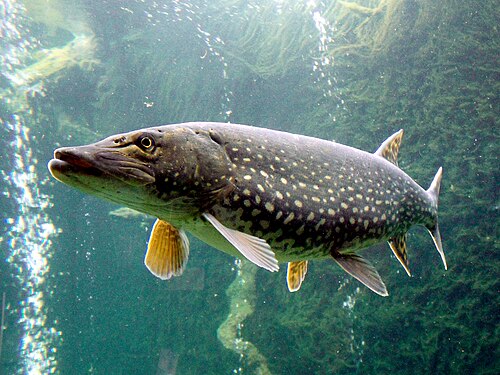
Northern Pike
Esox lucius
A long, elongated body with a long head and large, duck-bill-shaped jaws set with many canine teeth (Iowa DNR).
How to recognize it · Northern Pike vs Chain Pickerel vs Grass Pickerel
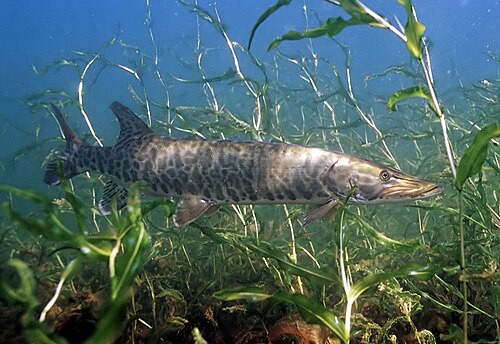
Muskellunge
Esox masquinongy
Pennsylvania and Missouri give no written identification features and point to an illustration comparing pike, musky and walleye. When unsure, check your state agency's fish-ID guide.
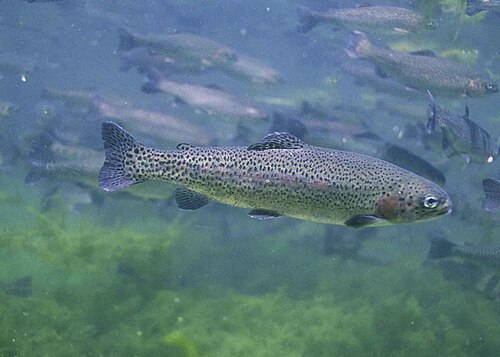
Rainbow Trout
Oncorhynchus mykiss
Olive to greenish-blue above and silvery-white below, with a strikingly prominent pink-red horizontal stripe on each side (Iowa DNR).
How to recognize it · Rainbow vs Brown vs Brook vs Lake Trout
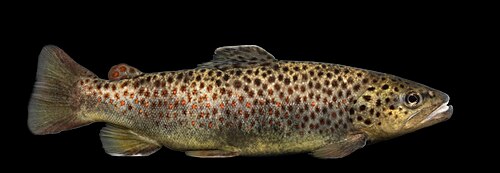
Brown Trout
Salmo trutta
Generally brown, shading to green and yellow, with side spots that are larger and more prominent than on other trout (Iowa DNR).
How to recognize it · Rainbow vs Brown vs Brook vs Lake Trout
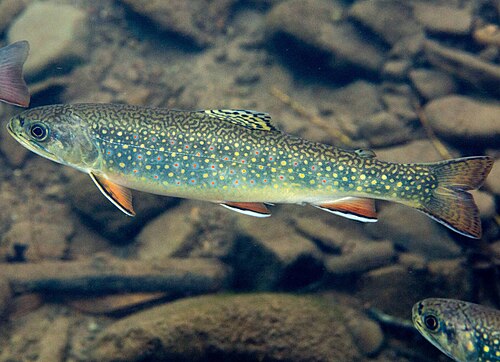
Brook Trout
Salvelinus fontinalis
Vivid white lines on the leading edge of the lower fins, and light worm-like markings (vermiculations) on the back (Iowa DNR).
How to recognize it · Rainbow vs Brown vs Brook vs Lake Trout
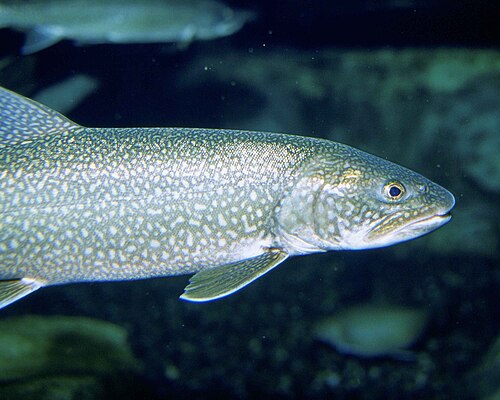
Lake Trout
Salvelinus namaycush
A green, gray, brown or almost black back with lighter sides and a white belly (Ontario).
How to recognize it · Rainbow vs Brown vs Brook vs Lake Trout
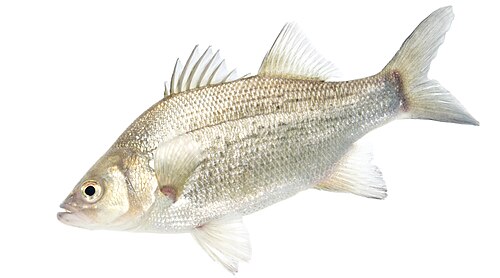
White Bass
Morone chrysops
Silvery, spiny-rayed and elongated, with several dark horizontal streaks (Missouri Department of Conservation).
How to recognize it · White vs Striped vs Hybrid vs Yellow Bass · Yellow Perch vs White Perch vs White Bass
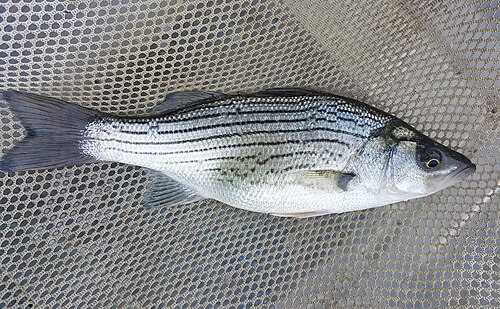
Hybrid Striped Bass
Morone chrysops x saxatilis
Silvery and spiny-rayed with several dark streaks that are often discontinuous, a sharp spine on the gill cover, a dorsal fin with the spiny and soft parts entirely separate, and a lower jaw that projects beyond the upper (Missouri).
How to recognize it · White vs Striped vs Hybrid vs Yellow Bass
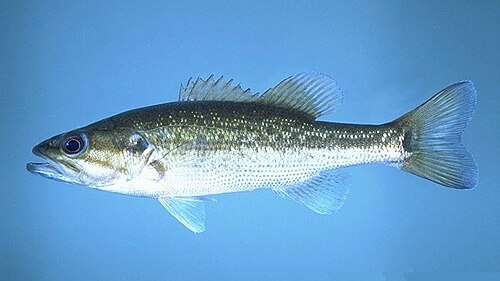
Spotted Bass
Micropterus punctulatus
Adults have horizontal rows of small black spots on the lower sides, unlike the plain sides of a largemouth (Kentucky Department of Fish and Wildlife Resources).
How to recognize it · Largemouth vs Smallmouth vs Spotted Bass
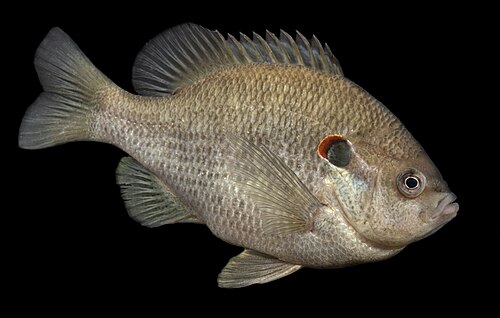
Redear Sunfish (Shellcracker)
Lepomis microlophus
A deep, slab-sided body with pointed pectoral fins, light green to gold sides with red or orange flecks, and a yellowish-orange belly (North Carolina).
How to recognize it · Bluegill vs Redear vs Pumpkinseed vs Green Sunfish
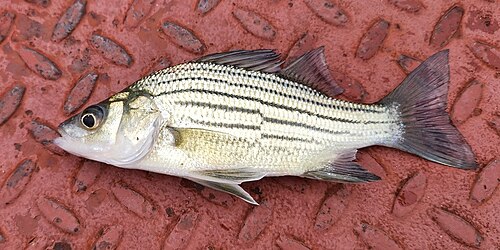
Yellow Bass
Morone mississippiensis
A laterally compressed, slab-sided, spiny-rayed fish, yellow-olive to silvery-yellow, fading to yellowish-white on the belly (Iowa DNR).
How to recognize it · White vs Striped vs Hybrid vs Yellow Bass
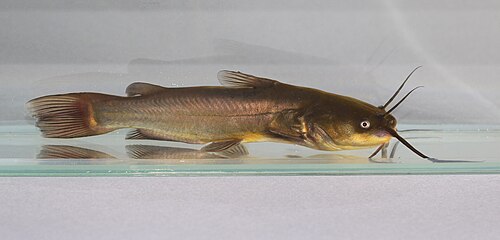
Bullhead Catfish
Ameiurus melas
Smooth, scaleless skin and barbels around the mouth, a square tail and a rounded anal fin (Missouri Department of Conservation).
How to recognize it · Channel vs Blue vs Flathead Catfish (and Bullheads)
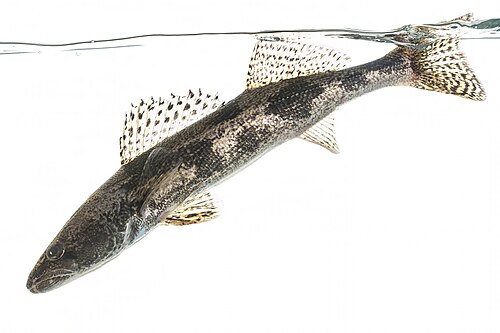
Sauger
Sander canadensis
A torpedo-shaped body with two dorsal fins, dark spots on the leading dorsal fin, irregular dark blotches on the body, and no white tip on the lower tail (Minnesota DNR).
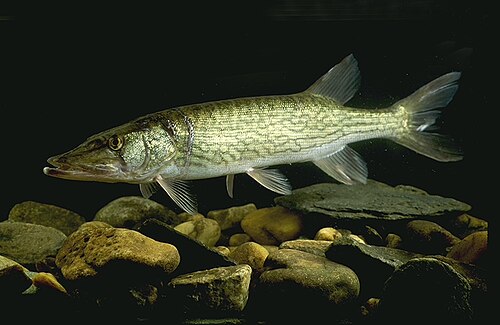
Chain Pickerel
Esox niger
Chain-like markings along the side and a dark vertical bar under the eye, with sharp, needle-like teeth (New York DEC).
How to recognize it · Northern Pike vs Chain Pickerel vs Grass Pickerel
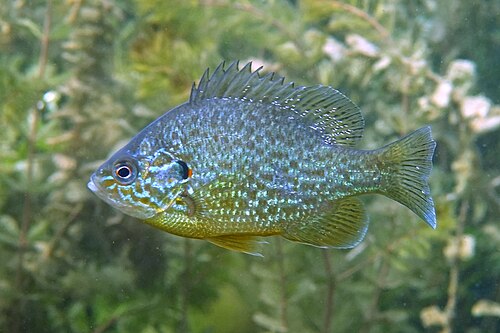
Pumpkinseed Sunfish
Lepomis gibbosus
A small, deep-bodied fish with wavy, blue-green stripes on the sides of the head and an ear flap with an orange or red spot (Ontario).
How to recognize it · Bluegill vs Redear vs Pumpkinseed vs Green Sunfish
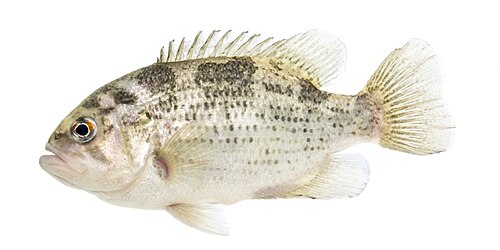
Rock Bass
Ambloplites rupestris
Small and very deep-bodied, with a brown to olive back and golden tints, regular rows of spots along the side, a large red eye and a large mouth that extends to below the middle of the eye (Ontario).
How to recognize it · Bluegill vs Redear vs Pumpkinseed vs Green Sunfish
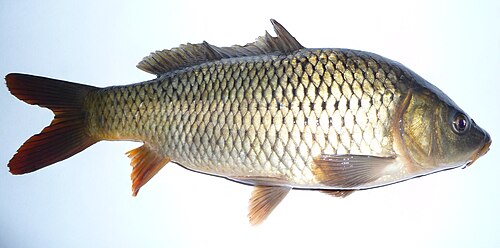
Common Carp
Cyprinus carpio
A large, deep-bodied fish with "whiskers" (barbels) beside the mouth, silver to olive-green, brassy or gray, with a yellowish belly and orange-red lower fins (Ontario).
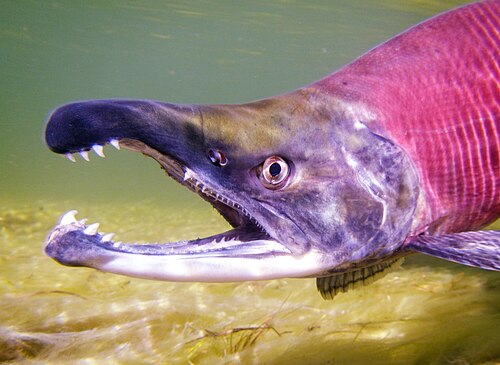
Kokanee Salmon
Oncorhynchus nerka
Non-spawning: bright silver sides, a dark blue to green back, occasional small dark spots on the back and tail fin, and a deeply forked tail, which separates them from rainbow trout (California DFW).
How to recognize it · Chinook vs Coho vs Pink vs Atlantic Salmon vs Kokanee
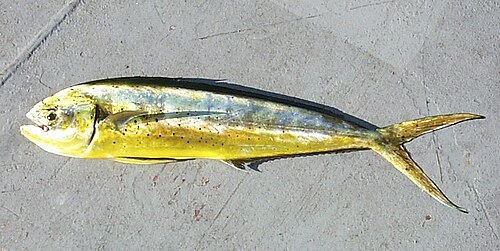
Mahi-Mahi (Dolphinfish)
Coryphaena hippurus
A bright greenish-blue back with yellow on the sides, and irregular blue or golden blotches scattered over the sides (Florida).
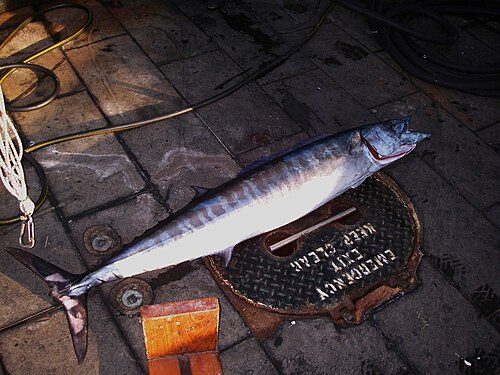
Wahoo
Acanthocybium solandri
A long, narrow, torpedo-shaped body with a dark bluish-green or steel-blue back, silvery sides and a whitish or pale belly (Florida, North Carolina).
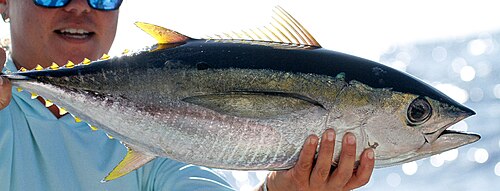
Yellowfin Tuna
Thunnus albacares
A torpedo-shaped fish, metallic dark blue on the back and upper sides, with a golden-yellow stripe on the sides and a belly that changes to silver (Florida, North Carolina).
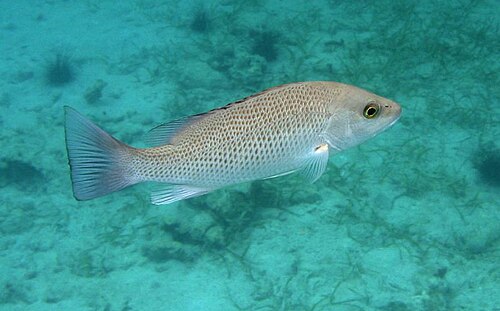
Gray (Mangrove) Snapper
Lutjanus griseus
Dark brown or gray, with red-orange spots in bars along the sides, and dorsal fins with dark or reddish borders (Florida).
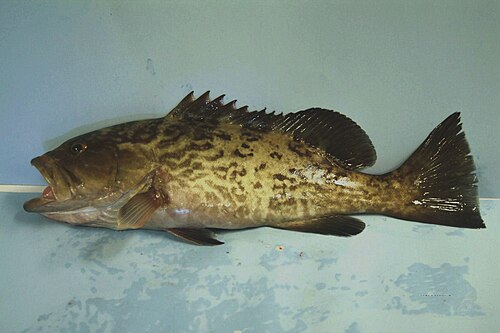
Gag Grouper
Mycteroperca microlepis
Brownish-gray, with dark worm-like markings on the sides. Large gag are dark brownish-gray on top and paler below (Florida, North Carolina).
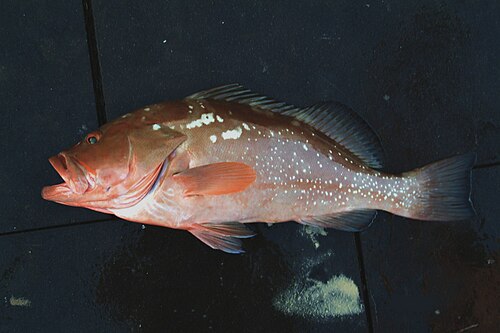
Red Grouper
Epinephelus morio
Body color is brownish-red, with tiny black dots on the snout and a mouth lined in scarlet-orange (Florida).
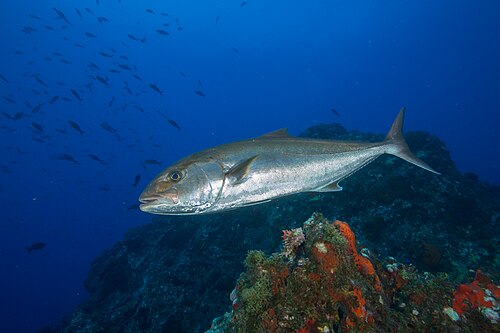
Greater Amberjack
Seriola dumerili
A dark amber or dusky band on the side of the head, angling from the nose through the eye to the front of the first dorsal fin (Texas, North Carolina, NOAA).
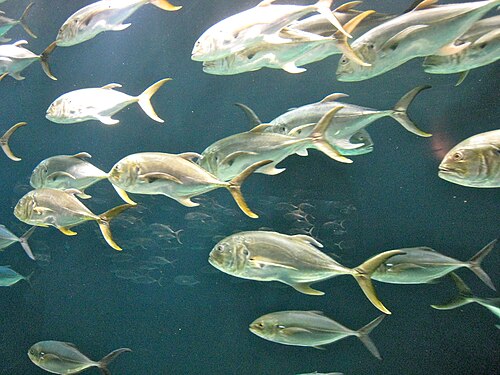
Jack Crevalle
Caranx hippos
Texas says a dark spot on the gill cover and a steeply convex forehead separate this fish from other jacks.
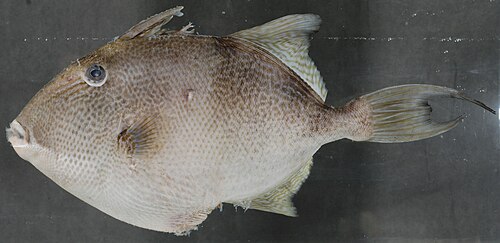
Gray Triggerfish
Balistes capriscus
A deep, laterally compressed body covered with tough, sandpaper-like skin, and large incisor-like teeth (North Carolina).
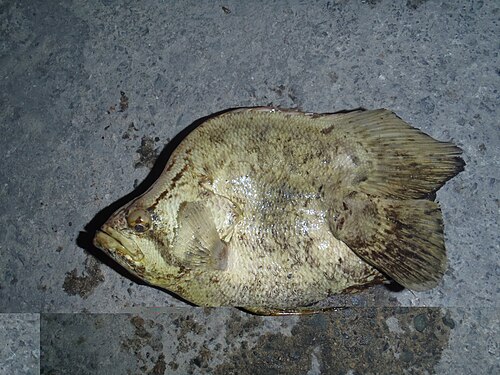
Tripletail
Lobotes surinamensis
Deep-bodied, with the soft rays of the dorsal and anal fins set well back toward the tail, which gives a tri-lobed look (Texas).
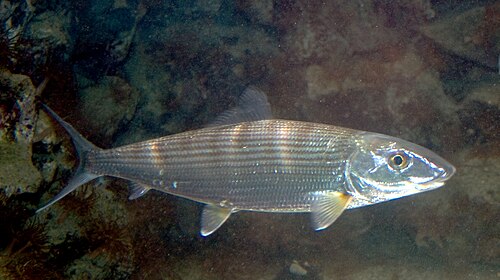
Bonefish
Albula vulpes
A silvery fish with a bluish or greenish back and a slender, round body (Florida).
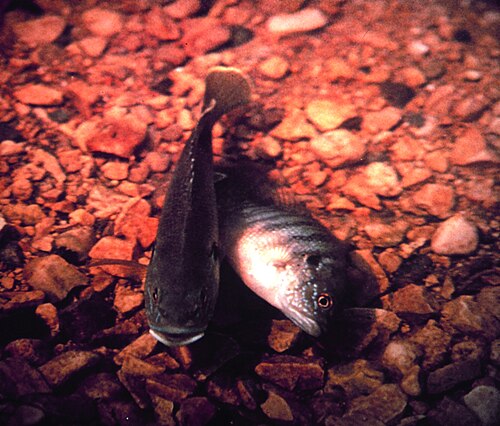
Tautog (Blackfish)
Tautoga onitis
A stout-bodied, dark-colored fish with thick rubbery lips and one long continuous dorsal fin (New York).
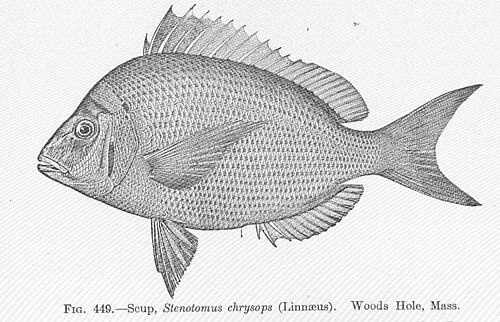
Scup (Porgy)
Stenotomus chrysops
Deep-bodied, deeper from back to belly than they are wide, dusky brown with bright silvery reflections below and spiny fins (NOAA).
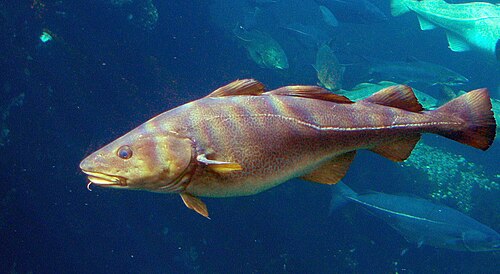
Atlantic Cod
Gadus morhua
Heavy-bodied with a large head, blunt snout, and a distinct barbel under the lower jaw (NOAA).
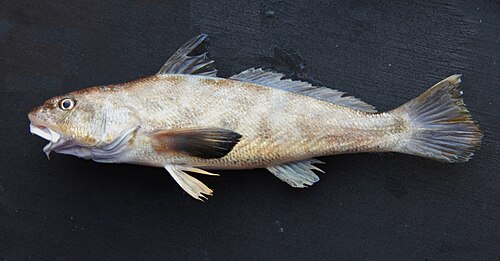
Kingfish (Whiting)
Menticirrhus americanus
Medium-sized fish with slender bodies and slightly elevated backs (North Carolina).
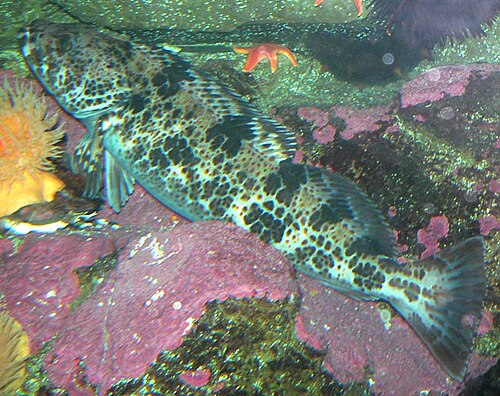
Lingcod
Ophiodon elongatus
An elongated body with a large mouth and sharp, canine-like teeth (Oregon).
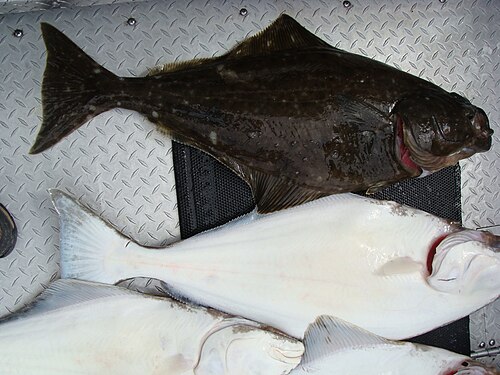
Pacific Halibut
Hippoglossus stenolepis
Nearly all have both eyes on the right-hand side (Alaska, Oregon).
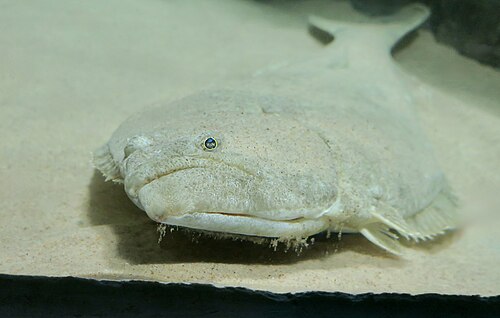
California Halibut
Paralichthys californicus
Usually solid brown to black or mottled with light and dark patches on the eyed side, and white underneath. They change skin color patterns to blend with the bottom (Oregon).
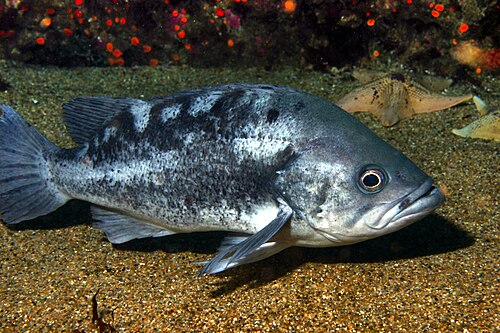
Black Rockfish
Sebastes melanops
Dark gray to black on top with a lighter belly, and black spots on the dorsal fins (Oregon).
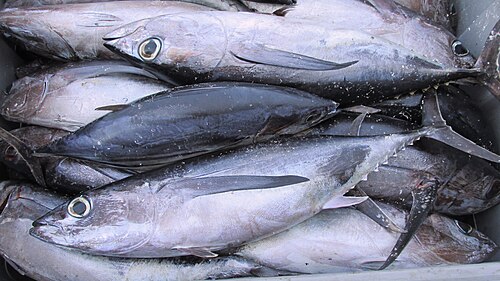
Albacore Tuna
Thunnus alalunga
Dark blue backs, silver sides and bellies, and very long pectoral fins (Oregon).
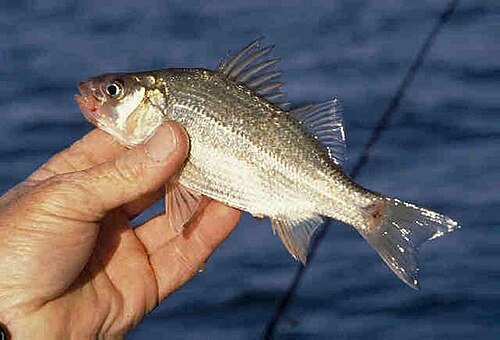
White Perch
Morone americana
Silvery-gray to silvery white on the sides with a white belly, a greenish to brownish back, and no horizontal stripes or other conspicuous marks (New York, Connecticut).
How to recognize it · Yellow Perch vs White Perch vs White Bass
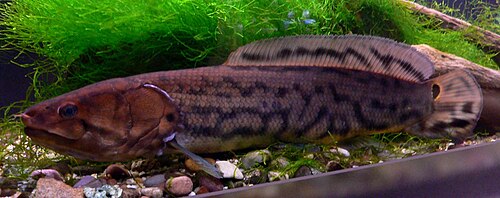
Bowfin
Amia calva
A long, nearly cylindrical, olive-green fish mottled on the back and pale green on the belly, with a scaleless head and a long dorsal fin that runs from the middle of the back to the tail (Indiana, Minnesota).
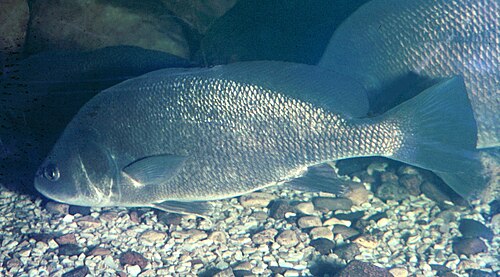
Freshwater Drum
Aplodinotus grunniens
A silvery, deep-bodied, humpbacked fish with a rounded profile and a small tail (Indiana, Minnesota).
Saltwater fish
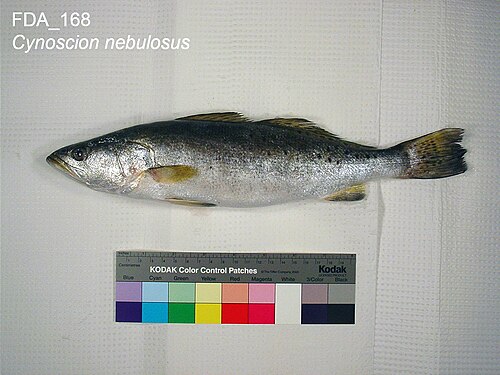
Spotted Seatrout
Cynoscion nebulosus
A dark gray or green back, silvery-white underside, and distinct round spots on the back, fins and tail (Texas Parks & Wildlife).
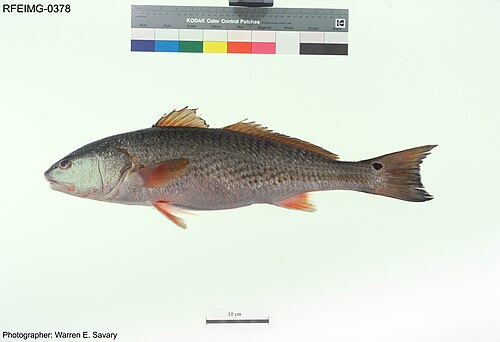
Red Drum (Redfish)
Sciaenops ocellatus
The key mark is one large black spot on the upper part of the tail base. Multiple spots are common, and no spots are extremely rare (Texas Parks & Wildlife).
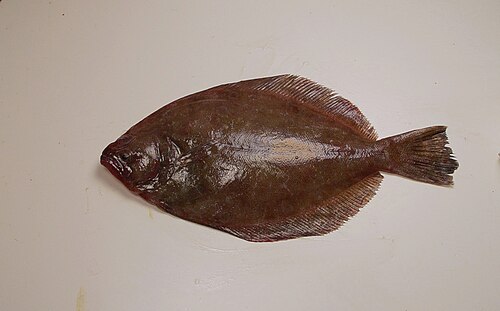
Flounder
Paralichthys lethostigma
Southern flounder: brown on the left side with dark and light spots and blotches, not ringed or ocellated, with a white right side (North Carolina). Typical catches are 15 to 18 inches.
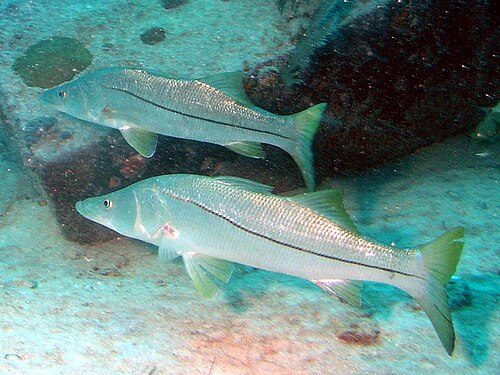
Snook
Centropomus undecimalis
A golden-yellow body with a distinct black lateral line, a sloping forehead and a protruding lower jaw (Florida Museum of Natural History).
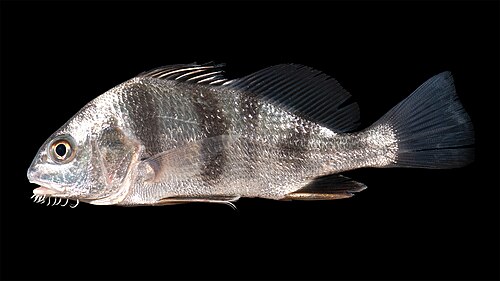
Black Drum
Pogonias cromis
A chunky, high-backed fish with several barbels under the lower jaw (Texas Parks & Wildlife). North Carolina lists a short, deep body, a high-arched back, a flattish belly and conspicuous chin barbels.
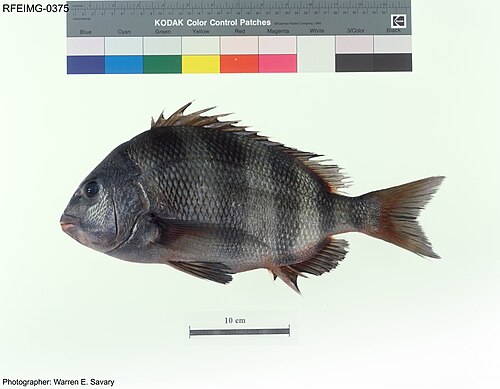
Sheepshead
Archosargus probatocephalus
Vivid black and white bars, which is why it is called the "convict fish," and prominent front teeth that look somewhat like human teeth (Texas Parks & Wildlife).
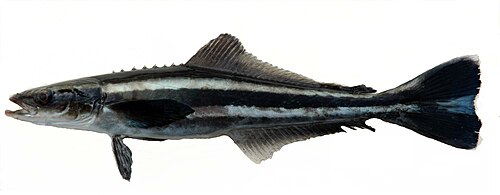
Cobia
Rachycentron canadum
A long, torpedo-shaped body with a long, flattened head, small eyes, a broad snout, and a lower jaw that extends past the upper (North Carolina).
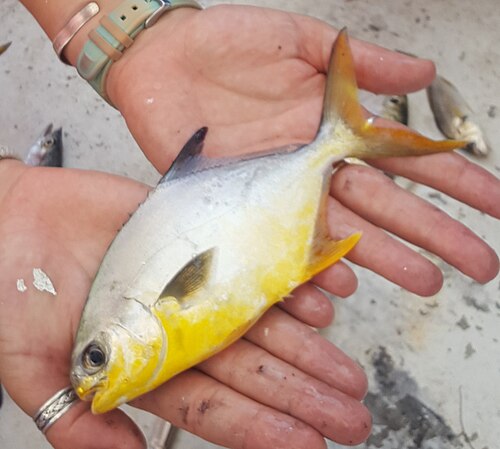
Florida Pompano
Trachinotus carolinus
A deep-bodied fish, grayish or blue on the back, shading to silver on the sides, with yellow underneath and a bluish tint above and in front of the eyes (Texas Parks & Wildlife).
How to recognize it · Red Snapper vs Lane Snapper, and Pompano vs Jack Crevalle
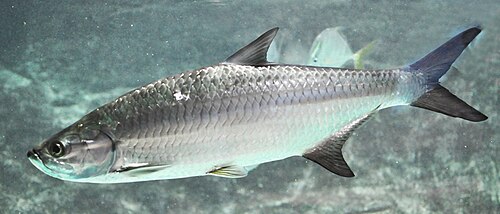
Tarpon
Megalops atlanticus
Also called "Silver King," with large, flat scales up to three inches in diameter, an elongated dorsal fin, a falcate anal fin and a large bony underslung jaw (Texas Parks & Wildlife).
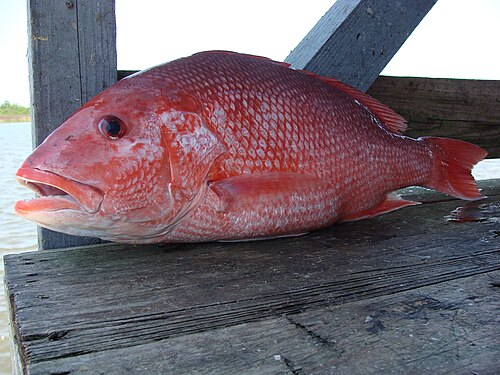
Red Snapper
Lutjanus campechanus
A deep rosy-red body with a dark fringe around the dorsal and tail fins (Texas Parks & Wildlife).
How to recognize it · Red Snapper vs Lane Snapper, and Pompano vs Jack Crevalle
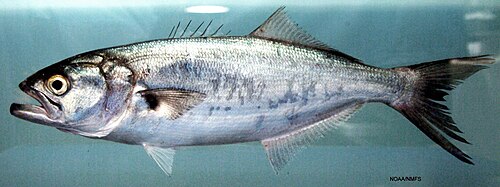
Bluefish
Pomatomus saltatrix
Greenish-blue on the back, fading to silver on the sides and belly, a stout body, large mouth and prominent, sharp teeth, with the lower jaw jutting out (North Carolina DMF).
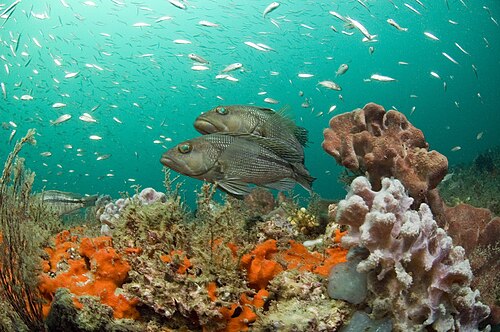
Black Sea Bass
Centropristis striata
Larger fish are black, and smaller fish are dusky brown. The dorsal fin has white spots and bands, and the upper tail lobe ends in a filament (North Carolina DMF).
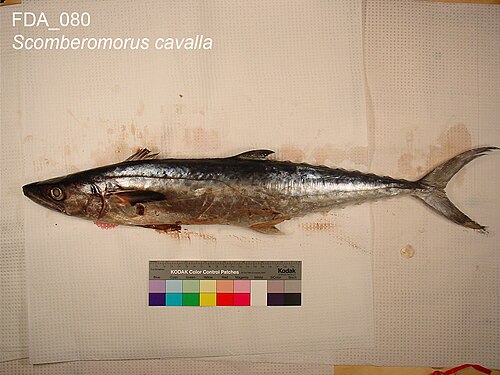
King Mackerel
Scomberomorus cavalla
A long, slender body with a greenish-blue back and silvery sides, faint bronze spots that may fade as fish grow, and a large, forked tail (North Carolina DMF).
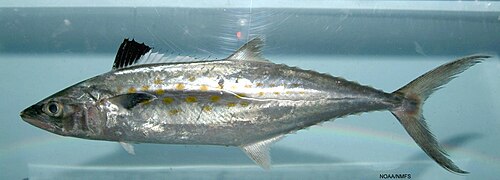
Spanish Mackerel
Scomberomorus maculatus
Greenish backs with silvery sides and belly, with golden yellow spots above and below the lateral line. The front of the first dorsal fin is black and the lateral line curves gently to the tail base (North Carolina DMF).
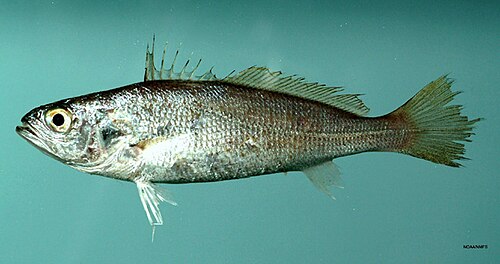
Weakfish
Cynoscion regalis
Dark olive-green on top, silvery below, with a purple, lavender, green, blue, golden or copper sheen. Wavy lines of dark blotches run down and forward on the sides but not into the fins (North Carolina DMF).
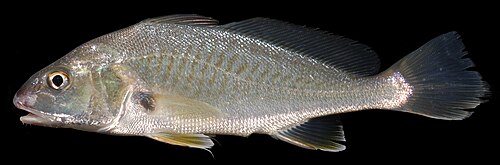
Atlantic Croaker
Micropogonias undulatus
Silvery with a faint pinkish-bronze cast, a grayish back, and brassy or brown spots forming wavy lines on the sides (North Carolina DMF).
Fish that live in both fresh and salt water
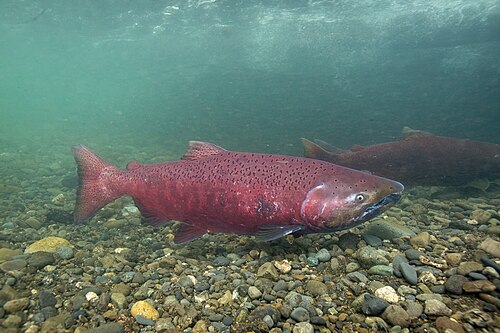
Chinook Salmon
Oncorhynchus tshawytscha
The largest Pacific salmon, with black irregular spots on the back, dorsal fins and both lobes of the tail fin, and black gums, which gives them the nickname "blackmouth" (Alaska DFG).
How to recognize it · Chinook vs Coho vs Pink vs Atlantic Salmon vs Kokanee
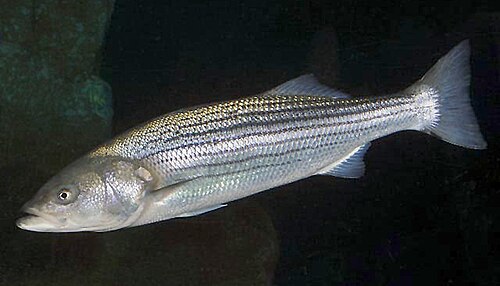
Striped Bass
Morone saxatilis
A stout, elongated body, silvery sides with seven or eight horizontal black stripes, and a back that ranges from dark olive-green to steel blue or grayish black (North Carolina; NOAA lists seven to eight continuous stripes).
How to recognize it · White vs Striped vs Hybrid vs Yellow Bass
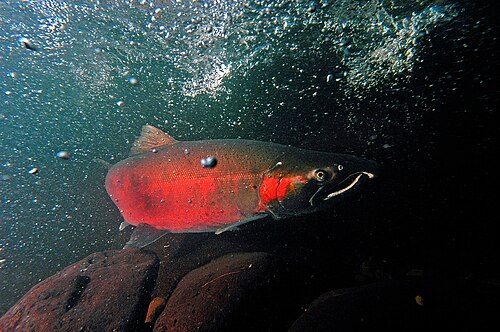
Coho Salmon
Oncorhynchus kisutch
A deep-bodied but thin-from-side-to-side fish with a blue or green back, silvery sides and a white belly, and a tail spotted on the upper lobe only (Ontario).
How to recognize it · Chinook vs Coho vs Pink vs Atlantic Salmon vs Kokanee
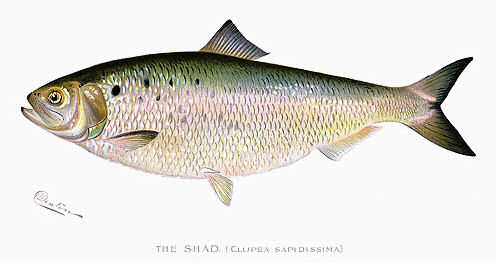
American Shad
Alosa sapidissima
A herring-family fish with a thin body, silvery scales, a bluish back and a saw-toothed ridge along the belly (North Carolina).
Fish that get mixed up
These pairs and groups are the ones the look-alike guides line up side by side, with the identification features each agency lists.
- Largemouth vs Smallmouth vs Spotted Bass: The jaw, the side markings, the dorsal notch and the tongue.
- White vs Striped vs Hybrid vs Yellow Bass: Stripes, tongue patches and fin details for the temperate bass family.
- Channel vs Blue vs Flathead Catfish (and Bullheads): Tail shape, the anal fin, the head and the spots.
- Red Drum vs Black Drum vs Sheepshead: The tail spot, chin barbels, bars and teeth.
- Walleye vs Sauger: The white tail tip, dorsal-fin spots and body markings.
- Rainbow vs Brown vs Brook vs Lake Trout: The pink stripe, the spots, the white fin edges and the tail.
- Chinook vs Coho vs Pink vs Atlantic Salmon vs Kokanee: Tail spots, mouth and gums, and the anal fin.
- Spotted Seatrout vs Weakfish: Round spots into the tail and second dorsal fin, or wavy blotches that stop short of the fins.
- King vs Spanish Mackerel: The first dorsal fin, the lateral line, the spots and the size.
- Bluegill vs Redear vs Pumpkinseed vs Green Sunfish: The ear flap, the cheek lines and the mouth.
- Northern Pike vs Chain Pickerel vs Grass Pickerel: Spots versus chainlike lines, the bar under the eye, and size.
- American Shad vs Hickory Shad: The jaws and the shape of the cheek patch.
- Red Snapper vs Lane Snapper, and Pompano vs Jack Crevalle: Fin shape and ray counts for snappers, and the smooth tail side of a pompano.
- Yellow Perch vs White Perch vs White Bass: Vertical bars, no stripes, or horizontal streaks.
Photo credits
- Largemouth Bass: Photo: U.S. Fish & Wildlife Service, Mountain-Prairie Region (public domain), via Wikimedia Commons
- Smallmouth Bass: Photo: U.S. Fish & Wildlife Service, Mountain-Prairie Region (public domain), via Wikimedia Commons
- Crappie: Photo: U.S. Fish & Wildlife Service (public domain), via Wikimedia Commons
- Bluegill: Photo: Paleo1954 (CC BY-SA 4.0), via Wikimedia Commons
- Channel Catfish: Photo: U.S. Fish & Wildlife Service, Mountain-Prairie Region (public domain), via Wikimedia Commons
- Blue Catfish: Photo: U.S. Fish & Wildlife Service, Mountain-Prairie Region (public domain), via Wikimedia Commons
- Flathead Catfish: Photo: Eric Engbretson, U.S. Fish & Wildlife Service (public domain), via Wikimedia Commons
- Walleye: Photo: U.S. Fish & Wildlife Service, Mountain-Prairie Region (public domain), via Wikimedia Commons
- Yellow Perch: Photo: U.S. Fish & Wildlife Service, Mountain-Prairie Region (public domain), via Wikimedia Commons
- Northern Pike: Photo: Jik jik (CC BY-SA 3.0), via Wikimedia Commons
- Muskellunge: Photo: Eric Engbretson, U.S. Fish & Wildlife Service (public domain), via Wikimedia Commons
- Rainbow Trout: Photo: Eric Engbretson, U.S. Fish & Wildlife Service (public domain), via Wikimedia Commons
- Brown Trout: Photo: U.S. Fish & Wildlife Service, Mountain-Prairie Region (public domain), via Wikimedia Commons
- Brook Trout: Photo: U.S. Fish & Wildlife Service (public domain), via Wikimedia Commons
- Lake Trout: Photo: Eric Engbretson, U.S. Fish & Wildlife Service (public domain), via Wikimedia Commons
- White Bass: Photo: U.S. Fish & Wildlife Service, Mountain-Prairie Region (public domain), via Wikimedia Commons
- Hybrid Striped Bass: Photo: Oregon Department of Fish & Wildlife (CC BY-SA 2.0), via Wikimedia Commons
- Spotted Bass: Photo: Noel Burkhead and Howard Jelks, U.S. Geological Survey (public domain), via Wikimedia Commons
- Redear Sunfish (Shellcracker): Photo: U.S. Fish & Wildlife Service, Mountain-Prairie Region (public domain), via Wikimedia Commons
- Yellow Bass: Photo: Dominic (iNaturalist) (CC BY 4.0), via Wikimedia Commons
- Bullhead Catfish: Photo: George Chernilevsky (CC BY-SA 4.0), via Wikimedia Commons
- Sauger: Photo: U.S. Fish & Wildlife Service (public domain), via Wikimedia Commons
- Chain Pickerel: Photo: USDA (public domain), via Wikimedia Commons
- Pumpkinseed Sunfish: Photo: Lorenz Seebauer (CC BY-SA 4.0), via Wikimedia Commons
- Rock Bass: Photo: U.S. Fish & Wildlife Service, Mountain-Prairie Region (public domain), via Wikimedia Commons
- Common Carp: Photo: George Chernilevsky (CC BY-SA 3.0), via Wikimedia Commons
- Kokanee Salmon: Photo: U.S. Fish & Wildlife Service, Mountain-Prairie Region (public domain), via Wikimedia Commons
- Mahi-Mahi (Dolphinfish): Photo: Brandi Noble, NOAA Fisheries Collection (public domain), via Wikimedia Commons
- Wahoo: Photo: NOAA Fisheries, Southeast Fisheries Science Center (public domain), via Wikimedia Commons
- Yellowfin Tuna: Photo: steve b (iNaturalist) (CC0), via Wikimedia Commons
- Gray (Mangrove) Snapper: Photo: Clinton & Charles Robertson (CC BY 2.0), via Wikimedia Commons
- Gag Grouper: Photo: NOAA Fisheries, Southeast Fisheries Science Center (public domain), via Wikimedia Commons
- Red Grouper: Photo: NOAA Fisheries, Southeast Fisheries Science Center (public domain), via Wikimedia Commons
- Greater Amberjack: Photo: NOAA Photo Library (CC BY 2.0), via Wikimedia Commons
- Jack Crevalle: Photo: Kevin Lawver (CC BY-SA 2.0), via Wikimedia Commons
- Gray Triggerfish: Photo: Smithsonian Environmental Research Center (CC BY 2.0), via Wikimedia Commons
- Tripletail: Photo: Efstathios Efstathiou and Marios Paphitis (CC BY 3.0), via Wikimedia Commons
- Bonefish: Photo: Brian Gratwicke (CC BY 2.0), via Wikimedia Commons
- Tautog (Blackfish): Photo: NOAA Estuarine Research Reserve Collection (public domain), via Wikimedia Commons
- Scup (Porgy): Illustration: David Starr Jordan (illustration) (public domain), via Wikimedia Commons
- Atlantic Cod: Photo: Hans-Petter Fjeld (CC BY-SA 2.5), via Wikimedia Commons
- Kingfish (Whiting): Photo: NOAA Fisheries, Southeast Fisheries Science Center (public domain), via Wikimedia Commons
- Lingcod: Photo: Stan Shebs (CC BY-SA 3.0), via Wikimedia Commons
- Pacific Halibut: Photo: Jlikes2Fish (public domain), via Wikimedia Commons
- California Halibut: Photo: RatioTile (CC BY-SA 4.0), via Wikimedia Commons
- Black Rockfish: Photo: Chad King, NOAA Monterey Bay National Marine Sanctuary (public domain), via Wikimedia Commons
- Albacore Tuna: Photo: Joachim Langeneck (CC BY-SA 4.0), via Wikimedia Commons
- White Perch: Photo: NOAA Great Lakes Environmental Research Laboratory (public domain), via Wikimedia Commons
- Bowfin: Photo: Stan Shebs (CC BY-SA 3.0), via Wikimedia Commons
- Freshwater Drum: Photo: Hans Schneider (CC BY-SA 3.0), via Wikimedia Commons
- Spotted Seatrout: Photo: U.S. Food & Drug Administration (public domain), via Wikimedia Commons
- Red Drum (Redfish): Photo: U.S. Food & Drug Administration (public domain), via Wikimedia Commons
- Flounder: Photo: NOAA Fisheries, Southeast Fisheries Science Center (public domain), via Wikimedia Commons
- Snook: Photo: Matthew Hoelscher (CC BY-SA 2.0), via Wikimedia Commons
- Black Drum: Photo: Smithsonian Environmental Research Center (CC BY 2.0), via Wikimedia Commons
- Sheepshead: Photo: U.S. Food & Drug Administration (public domain), via Wikimedia Commons
- Cobia: Photo: D. Ross Robertson, Smithsonian Tropical Research Institute (public domain), via Wikimedia Commons
- Florida Pompano: Photo: Some pig (iNaturalist) (CC0), via Wikimedia Commons
- Tarpon: Photo: Citron (CC BY-SA 3.0), via Wikimedia Commons
- Red Snapper: Photo: Geeklikepi (CC BY-SA 3.0), via Wikimedia Commons
- Bluefish: Photo: NOAA Fisheries, Southeast Fisheries Science Center (public domain), via Wikimedia Commons
- Black Sea Bass: Photo: Greg McFall, Gray’s Reef National Marine Sanctuary (NOAA) (public domain), via Wikimedia Commons
- King Mackerel: Photo: U.S. Food & Drug Administration (public domain), via Wikimedia Commons
- Spanish Mackerel: Photo: NOAA Fisheries, Southeast Fisheries Science Center (public domain), via Wikimedia Commons
- Weakfish: Photo: NOAA Fisheries, Mississippi Laboratory (CC BY 3.0), via Wikimedia Commons
- Atlantic Croaker: Photo: Smithsonian Environmental Research Center (CC BY 2.0), via Wikimedia Commons
- Chinook Salmon: Photo: U.S. Fish & Wildlife Service (public domain), via Wikimedia Commons
- Striped Bass: Photo: D. Ross Robertson, Smithsonian Tropical Research Institute (public domain), via Wikimedia Commons
- Coho Salmon: Photo: Oregon Department of Fish & Wildlife (public domain), via Wikimedia Commons
- American Shad: Illustration: Sherman F. Denton (illustration, 1904) (public domain), via Wikimedia Commons


Taking this fishing? Save it to your phone so it opens without a signal.
On iPhone: tap the Share button, then Add to Home Screen.
This page is information only. It reports what the agencies above publish, from different states and years, so local waters and rules can differ. It is not legal advice and does not tell anyone what to keep, catch or do. CatchCheck uses AI to identify fish from photos, and the ID can be wrong.