
Northern Pike: How to Catch More of Them
A playbook built from state and provincial wildlife pages. Reviewed October 25, 2026.
Also called: pike, jackfish, gator
Jump to: How to recognize one · Where they hold · Baits and lures · Releasing a fish · Sources
The five-minute version
- Fish along vegetation lines: pike wait in ambush (Iowa).
- Use a leader: wire, steel or titanium (Iowa), or a foot-long steel or fluorocarbon leader (Minnesota).
- Bright spoons and spinners in red, white or silver (Iowa); baits in the 4- to 15-inch range that mimic perch or suckers (Minnesota).
- Early morning and evening are best; pike generally do not bite well at night (Minnesota).
- If nothing works, try different lures, presentations and locations (Minnesota).
How to recognize one
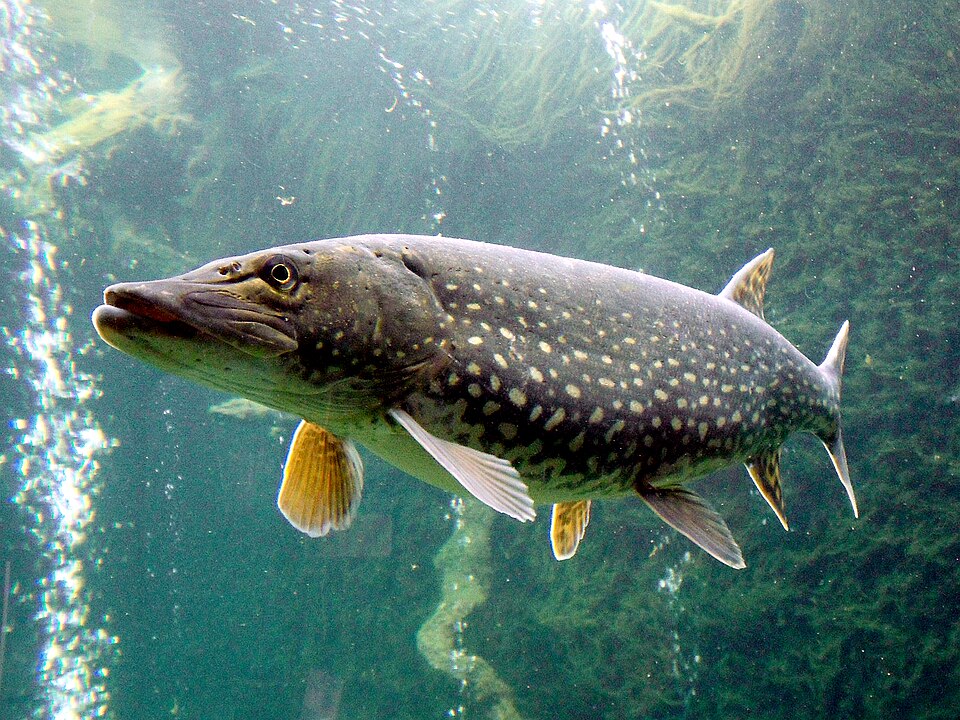
- A long, elongated body with a long head and large, duck-bill-shaped jaws set with many canine teeth (Iowa DNR).
- A back that is usually bluish-green to gray, with sides carrying irregular rows of light yellow or gold spots. Body color varies with the water.
Side-by-side help: Northern Pike vs Chain Pickerel vs Grass Pickerel
Where they hold
- Man-made recreational lakes, natural lakes and large rivers, preferring sluggish, heavily vegetated areas (Iowa).
- Iowa says they spend much of the year in shallow water, 3 to 6 feet, among vegetation, though they can also use deep water.
- Minnesota says to look in about 2 to 15 feet of water in lakes, in and around weedbeds, rocky points and other cover, in thick underwater vegetation ("cabbage patches") and along the edges of bulrush beds.
- In rivers, Minnesota lists scoured holes, sunken timber, weedy backwaters and eddies.
Seasons and timing
These notes come from the Iowa and Minnesota agency pages listed at the bottom. Neither page gives water-temperature numbers for pike.
Cool water and cool parts of the day
Iowa describes pike as a cool-water species, like walleye and smallmouth bass, more active during cool-water months or cooler parts of summer days.
- Iowa lists tip-ups with live bait in winter ice fishing.
Time of day
Minnesota says pike are most active in early morning and evening, can be caught at other times, and generally do not bite well at night.
- Minnesota says that in lakes, numbers and size vary by region: more, smaller fish in some areas and fewer, larger fish in others.
Techniques that work
Along the weed line
Iowa says to fish along aquatic vegetation lines, where pike wait in ambush.
Struggling-bait look
Minnesota says pike often stalk from below, so presenting a bait that looks injured or dying, such as a jerkbait, can work well.
Change it up
Minnesota says that if nothing works, try different lures, presentations and locations.
Baits and lures
Spoons and spinners
Iowa says pike readily strike live bait and flashy spoons or spinners, and that bright red, white or silver lures work best.
Jerkbaits and crankbaits
Minnesota lists jerkbaits that imitate an injured or dying fish, spoons and crankbaits, in sizes that mimic perch or suckers in the 4- to 15-inch range.
Live bait
Iowa says pike readily strike live bait, and lists live bait and tip-up rigs for winter ice fishing.
- Lures often carry multiple treble hooks, so Minnesota suggests a net and long-nose pliers.
A starter setup
- Rod: about 7 feet, moderate or medium-heavy action (Minnesota). Iowa lists stout medium or medium-heavy spinning or baitcasting reels.
- Line: Minnesota prefers braided line of at least 15 pound test over 8 pound monofilament, which is more likely to snap.
- Leader: a foot-long steel or fluorocarbon leader (Minnesota), or wire, steel or titanium (Iowa), because their sharp teeth can cut most fishing line.
If you are releasing a fish
These are general handling tips from Texas Parks & Wildlife. They say nothing about harvest rules: check your state's rules for that.
- Wet your hands, or use a wet rag or glove, before handling a fish.
- Minimize the time the fish is out of the water: no longer than you can hold your breath.
- Use needle-nose pliers, hemostats or a hook remover to take out the hook and protect your hands, and consider barbless hooks.
- If a net is needed, use a rubber-mesh landing net instead of abrasive nylon.
- When fishing in deep water, bring fish in slowly so they can adjust to the changing pressure.
- Minnesota suggests bringing the fish alongside the boat, gripping the hooks with pliers and backing them out with quick wrist snaps to limit handling damage.
Taking this fishing? Save it to your phone so it opens without a signal.
On iPhone: tap the Share button, then Add to Home Screen.
Sources
- Iowa Department of Natural Resources: Northern Pike
- Minnesota Department of Natural Resources: How to catch northern pike
- Texas Parks & Wildlife: Catch & Release Tips
This page is information only. It reports what the agencies above publish, from different states and years, so local waters can differ. It is not legal advice and does not tell anyone what to keep, catch or eat. Bait, tackle and hook rules vary by state and by water, so confirm with your state fish and wildlife agency. CatchCheck uses AI to identify fish from photos, and the ID can be wrong.