
Atlantic Croaker: How to Catch More of Them
A playbook built from state and provincial wildlife pages. Reviewed October 25, 2026.
Also called: croaker, pinhead
Jump to: How to recognize one · Where they hold · Baits and lures · Releasing a fish · Sources
The five-minute version
- Look for brassy or brown spots forming wavy lines on the sides and small barbels on the lower jaw (North Carolina).
- Fish the bottom with light tackle and natural bait from spring through fall (North Carolina).
- Shrimp, clams, bloodworms and squid are the baits listed.
- Fish just before or just after high tide, in channels or deep holes (North Carolina).
- They are opportunistic feeders on crustaceans, worms, mollusks and small fish (North Carolina).
How to recognize one
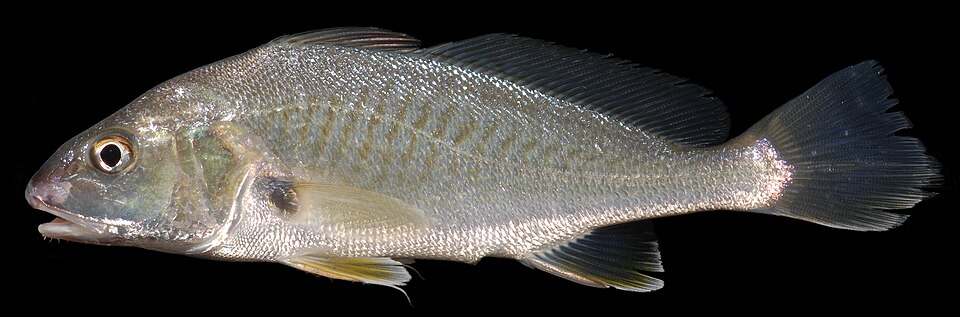
- Silvery with a faint pinkish-bronze cast, a grayish back, and brassy or brown spots forming wavy lines on the sides (North Carolina DMF).
- A moderately flat, elongated body with a downward-set mouth, a long head with a conical snout, a slightly pointed tail and small barbels on the lower jaw.
- Typical catch is about 9 inches and a third of a pound; maximum size listed is 20 inches and 5 pounds.
Look-alikes
- Pigfish, kingfish and undersized red drum: North Carolina says Atlantic croaker are often confused with pigfish, kingfish and undersized red drum.
Where they hold
- Muddy and sandy bottoms along the East Coast from Cape Cod to the South Atlantic and Gulf coasts, and to central Mexico. In North Carolina they are found throughout coastal waters (North Carolina).
- Spawning is offshore, usually peaking in October. Juveniles move into estuarine nursery areas and stay until the following fall (North Carolina).
Baits and lures
Natural baits
Shrimp, clams, bloodworms and squid (North Carolina).
- North Carolina says no lures are mentioned, and that they are an opportunistic feeder on crustaceans, worms, organic debris, mollusks and small fish.
A starter setup
- Fish on the bottom with light tackle and natural bait, from spring through fall, best just before or just after high tide, in channels or deep holes (North Carolina).
If you are releasing a fish
These are general handling tips from Texas Parks & Wildlife. They say nothing about harvest rules: check your state's rules for that.
- Wet your hands, or use a wet rag or glove, before handling a fish.
- Minimize the time the fish is out of the water: no longer than you can hold your breath.
- Use needle-nose pliers, hemostats or a hook remover to take out the hook and protect your hands, and consider barbless hooks.
- If a net is needed, use a rubber-mesh landing net instead of abrasive nylon.
- When fishing in deep water, bring fish in slowly so they can adjust to the changing pressure.
Taking this fishing? Save it to your phone so it opens without a signal.
On iPhone: tap the Share button, then Add to Home Screen.
Sources
- North Carolina Division of Marine Fisheries: Atlantic Croaker
- Texas Parks & Wildlife: Catch & Release Tips
This page is information only. It reports what the agencies above publish, from different states and years, so local waters can differ. It is not legal advice and does not tell anyone what to keep, catch or eat. Bait, tackle and hook rules vary by state and by water, so confirm with your state fish and wildlife agency. CatchCheck uses AI to identify fish from photos, and the ID can be wrong.