
Flathead Catfish: How to Catch More of Them
A playbook built from state and provincial wildlife pages. Reviewed October 25, 2026.
Also called: mud cat, yellow cat, shovelhead, appaloosa cat
Jump to: How to recognize one · Where they hold · Baits and lures · Releasing a fish · Sources
The five-minute version
- Look for cover: logs, drift piles, fallen trees, large rocks, undercut banks and stumps.
- Fish at night: Missouri says flatheads are mostly inactive during the day.
- Use live bait: sunfish, shad, large minnows or bullheads (Missouri, Oklahoma, North Carolina).
- Bring stout tackle: strong line, large hooks, a sturdy rod (Missouri, Oklahoma).
- Late spring and early summer is when Oklahoma says bank anglers do better, as flatheads move shallow to spawn.
How to recognize one
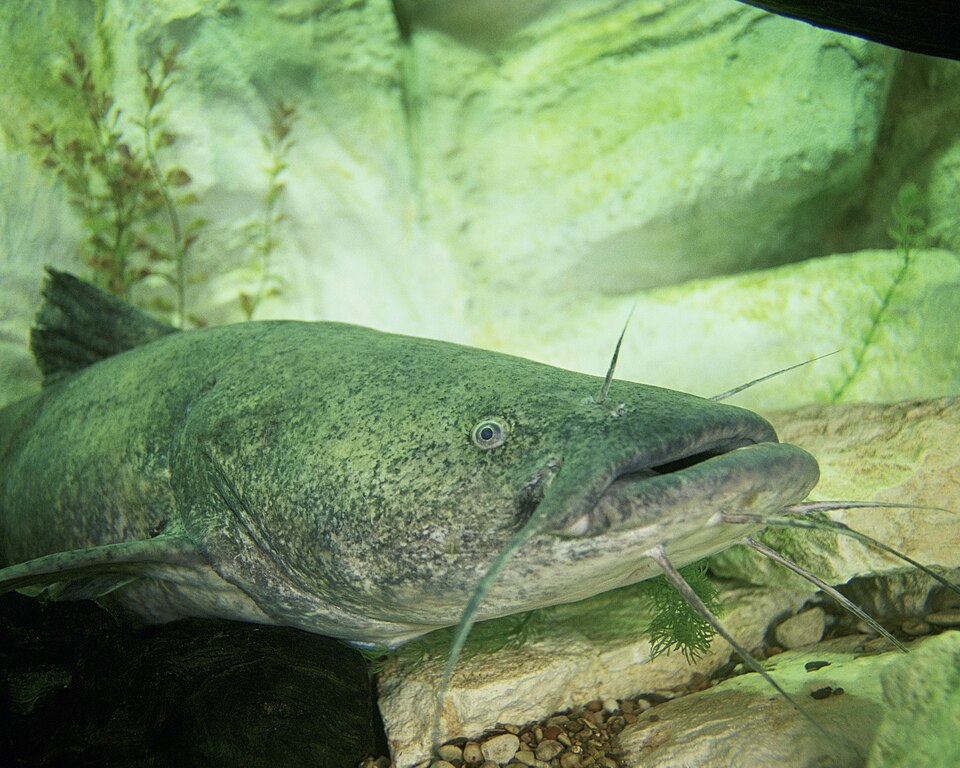
- A broad, flat head with the lower jaw protruding beyond the upper (North Carolina).
- Brown to yellow on the back and sides with black to olive-brown mottling, and a dirty white or yellow belly.
- No forked tail, and a darker body than blue or channel catfish (Oklahoma).
Look-alikes
- Channel and blue catfish: Both have forked tails and lighter, unmottled bodies (Oklahoma, North Carolina).
Side-by-side help: Channel vs Blue vs Flathead Catfish (and Bullheads)
Where they hold
- Large rivers and lakes, often in deep, slow stretches near submerged logs, brush, riprap and underwater piles of debris (North Carolina).
- Medium streams: drift piles, fallen trees and large rocks. Large rivers: quiet water near cover, channel breaks or wing dikes with deep water nearby. Large lakes: standing timber, underwater humps, islands and submerged creek channels (Missouri).
- Oklahoma describes warm, stained prairie rivers and creeks, with adults near old brushy tangles, submerged logs, undercut banks and deep holes, and heavily wooded coves and backwaters with hollow logs and stumps.
- During spawning they use rock ledges, log jams and bluffs, nesting in cavities such as under rocks or broken concrete (Oklahoma).
Seasons
These notes come from the Missouri, Oklahoma and North Carolina agency pages listed at the bottom, and timing shifts by region.
Late spring: water 60 to 70°F
Missouri says main-lake points and sub-points hold flatheads in late spring when water is 60 to 70°F. Oklahoma says spawning runs May through July, and that bank anglers do better in late spring and early summer when flatheads move shallow to spawn.
- Oklahoma suggests focusing on heavily wooded coves or backwaters with hollow logs and stumps when fishing from the bank with rod and reel.
Summer: after dark
Missouri says flatheads are mostly inactive during the day, so night fishing is more productive. Oklahoma says that in the warm summer months bank anglers do better after sunset.
- Oklahoma says most flathead fishing happens overnight.
Techniques that work
Live bluegill on a circle hook
Oklahoma suggests a live bluegill hooked through the lips or between the dorsal and tail fin on a 6/0 to 10/0 circle hook, tied to a 30 to 80 pound leader on a barrel swivel, with a half-ounce to one-ounce weight on the main line. Cast into woody areas and let it soak until a take.
Cover first
Missouri says to fish near cover: drift piles, fallen trees and large rocks in streams, standing timber and humps in lakes.
Passive methods
Missouri and Oklahoma list trotlines, limblines and jug lines; check your state agency's rules before using them.
Baits and lures
Live fish
Large minnows, goldfish, green sunfish, bullheads and crayfish (Missouri). Oklahoma lists live bluegill or other sunfish and live shad. North Carolina lists live shad, panfish and bullhead catfish, and says crawfish are reported to work as well.
Cut bait
Oklahoma says cut bait can work but is less effective.
What usually does not work
North Carolina says chicken livers and stinkbaits are rarely effective on flatheads.
- North Carolina says anglers should not move flathead catfish from one waterbody to another.
A starter setup
- Missouri says to use stout gear, strong line and large hooks, because flatheads are typically much larger than channel catfish.
- Oklahoma lists a sturdy rod and reel, a 6/0 to 10/0 circle hook and a 30 to 80 pound leader for rod-and-reel live-bait fishing.
If you are releasing a fish
These are general handling tips from Texas Parks & Wildlife. They say nothing about harvest rules: check your state's rules for that.
- Wet your hands, or use a wet rag or glove, before handling a fish.
- Minimize the time the fish is out of the water: no longer than you can hold your breath.
- Use needle-nose pliers, hemostats or a hook remover to take out the hook and protect your hands, and consider barbless hooks.
- If a net is needed, use a rubber-mesh landing net instead of abrasive nylon.
- When fishing in deep water, bring fish in slowly so they can adjust to the changing pressure.
Taking this fishing? Save it to your phone so it opens without a signal.
On iPhone: tap the Share button, then Add to Home Screen.
Sources
- Missouri Department of Conservation: Catfish tips for fishing
- North Carolina Wildlife Resources Commission: Flathead Catfish
- Oklahoma Department of Wildlife Conservation: Catfish angler guide
- Texas Parks & Wildlife: Catch & Release Tips
This page is information only. It reports what the agencies above publish, from different states and years, so local waters can differ. It is not legal advice and does not tell anyone what to keep, catch or eat. Bait, tackle and hook rules vary by state and by water, so confirm with your state fish and wildlife agency. CatchCheck uses AI to identify fish from photos, and the ID can be wrong.