
Cobia: How to Catch More of Them
A playbook built from state and provincial wildlife pages. Reviewed October 25, 2026.
Also called: ling, lemonfish
Jump to: How to recognize one · Where they hold · Baits and lures · Releasing a fish · Sources
The five-minute version
- Look under floating or stationary objects: logs, buoys, oil rigs and boats (Texas).
- Water temperature range: 68 to 86°F (North Carolina).
- Sight-cast bucktails to fish seen at the surface (North Carolina).
- Bottom-fish live bait near reefs and wrecks (North Carolina).
- Use a wire leader with 15 to 25 pound monofilament (Texas).
How to recognize one
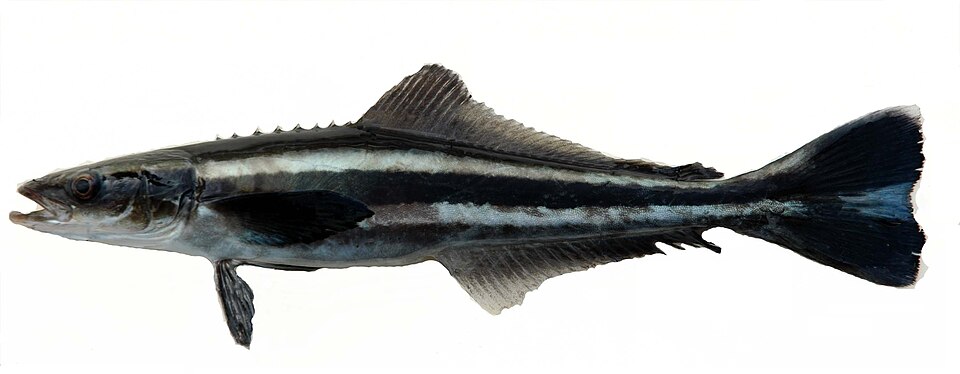
- A long, torpedo-shaped body with a long, flattened head, small eyes, a broad snout, and a lower jaw that extends past the upper (North Carolina).
- Adults are dark brown with a darker stripe from the eye to the tail; young fish have horizontal black and white bands with bronze, orange and green patches.
- Texas says cobia are chocolate brown, darker above, with spike-like dorsal spines in front of the long soft fin, and average 15 to 30 pounds.
Look-alikes
- Sharks and remoras: North Carolina says anglers may confuse cobia with sharks, remoras and sharksuckers.
Where they hold
- Pelagic and usually solitary, except when spawning, off the U.S. coast from Virginia southward and throughout the Gulf of Mexico, in inshore and nearshore waters of inlets and bays (North Carolina).
- Adults spend most of their time under floating or stationary objects in the open Gulf, and large fish are caught only in the Gulf (Texas).
- They are often found near reefs, wrecks, buoys and shelves, natural and man-made (North Carolina).
Seasons and temperature
These notes come from the North Carolina and Texas agency pages listed at the bottom, and timing shifts by region.
Preferred water: 68 to 86°F
North Carolina says cobia prefer water temperatures of 68 to 86°F, move south to warmer water in autumn and winter and return north in spring as temperatures rise.
- North Carolina says spawning runs from late June to mid-August along the southeastern U.S.
Summer in Texas: June through September
Texas says cobia are most common off Texas from June through September and migrate to tropical waters in winter.
- Texas says they often feed on scrap fish from shrimp boats.
Techniques that work
Sight casting
Sight casting with bucktails as cobia migrate along the East Coast (North Carolina).
Bottom fish near structure
Bottom fishing with live bait near reefs and wrecks (North Carolina).
Fish the markers
Fishing around inlet buoys or other navigation markers, where cobia are often seen (North Carolina).
Troll
Trolling while targeting king mackerel can also catch cobia (North Carolina).
Baits and lures
Bucktails and plugs
Bucktails for sight casting (North Carolina). Texas lists large spoons, plugs and jigs.
Live bait
Live bait for bottom fishing near reefs and wrecks (North Carolina).
Shrimp and squid
Texas lists shrimp and squid.
- Texas says cobia feed mostly on crustaceans such as shrimp and crabs, and on fish such as flounder.
A starter setup
- Texas lists a wire leader with 15 to 25 pound test monofilament.
If you are releasing a fish
These are general handling tips from Texas Parks & Wildlife. They say nothing about harvest rules: check your state's rules for that.
- Wet your hands, or use a wet rag or glove, before handling a fish.
- Minimize the time the fish is out of the water: no longer than you can hold your breath.
- Use needle-nose pliers, hemostats or a hook remover to take out the hook and protect your hands, and consider barbless hooks.
- If a net is needed, use a rubber-mesh landing net instead of abrasive nylon.
- When fishing in deep water, bring fish in slowly so they can adjust to the changing pressure.
Taking this fishing? Save it to your phone so it opens without a signal.
On iPhone: tap the Share button, then Add to Home Screen.
Sources
- Texas Parks & Wildlife: Cobia
- North Carolina Division of Marine Fisheries: Cobia
- Texas Parks & Wildlife: Catch & Release Tips
This page is information only. It reports what the agencies above publish, from different states and years, so local waters can differ. It is not legal advice and does not tell anyone what to keep, catch or eat. Bait, tackle and hook rules vary by state and by water, so confirm with your state fish and wildlife agency. CatchCheck uses AI to identify fish from photos, and the ID can be wrong.