
Bowfin: How to Catch More of Them
A playbook built from state and provincial wildlife pages. Reviewed October 25, 2026.
Also called: dogfish, grindle, grinnel, cypress trout, swamp muskie
Jump to: How to recognize one · Where they hold · Baits and lures · Releasing a fish · Sources
The five-minute version
- Fish woody cover and vegetation, even on bright sunny days (Missouri).
- Lures that work for largemouth bass also work: spinnerbaits, crankbaits, plastic worms (Indiana, Missouri).
- Live baits: minnows, crayfish, worms and frogs (Indiana).
- Missouri says natural baits fished on the bottom or under a bobber can work when they ignore lures.
- Missouri says the hard mouth makes a good hook set difficult, and hooked fish head for thick cover.
How to recognize one
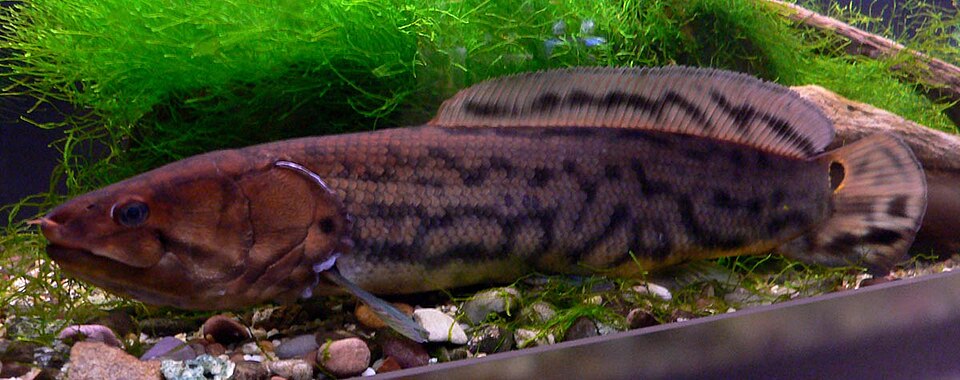
- A long, nearly cylindrical, olive-green fish mottled on the back and pale green on the belly, with a scaleless head and a long dorsal fin that runs from the middle of the back to the tail (Indiana, Minnesota).
- A rounded tail with a black spot near the base of the upper tail. Alabama says the spot is ringed in yellow or orange on young fish and adult males, and Minnesota says males have a black spot circled in green at the base of the tail.
- Texas says the dorsal fin has more than 45 rays and none of the fins have spines. Alabama says it has 46 to 50 soft rays and extends more than half the length of the back.
- A large mouth with many sharp teeth, and a barbel-like flap at each nostril (Texas, Alabama). Alabama says it is the only freshwater fish in Alabama with a bony plate between the lower jaws.
- Indiana says most adults are 15 to 27 inches long and weigh 1 to 5 pounds, and Texas says the average size in Texas is six to eight pounds.
Look-alikes
- Northern snakehead: Indiana says bowfin have a short anal fin, less than half the length of the dorsal fin, a large rounded head and a lower jaw shorter than the upper. Snakeheads have a very long anal fin, a more pointed, flattened head, and a lower jaw that protrudes past the upper. Missouri and Texas also list the snakehead as a look-alike.
Where they hold
- Indiana says bowfin are common in marshes, lakes and backwaters of large rivers associated with vegetation, and prefer calm, clear water.
- Alabama says they prefer quiet, clear, backwater areas, lingering along the margins of aquatic vegetation, in undercut banks and around branches and other submerged structure.
- Missouri says they are most abundant in relatively clear water with little to no current, and seek shelter in woody cover or vegetation.
- Texas says bowfins tend to be in deeper water during the day and move into shallower areas to feed at night.
Seasons
These notes come from the Indiana, Alabama and Texas pages listed at the bottom, and timing shifts by region.
Spring: nesting
Indiana says spawning runs from early April into May or early June, with males building nests in shallow, weedy areas and guarding the eggs and young. Texas says males guard the nest in shallow weedy areas in late spring.
- Indiana says the bowfin is an ambush predator that comes into the shallows at night to feed.
Techniques that work
Work the cover
Fish shelter such as woody cover or vegetation, which Missouri calls prime areas even in bright sun.
Lures
Missouri says bowfin take spinnerbaits, crankbaits and plastic worms, and that they often follow a lure nearly to the boat before striking.
Bait on the bottom or under a bobber
Missouri says night crawlers, minnows and bluegill heads fished on the bottom or under a bobber can work when bowfin ignore artificial lures.
Baits and lures
Minnows, crayfish, worms and frogs
Indiana lists minnows, crayfish, worms and frogs as live baits.
Night crawlers and bluegill heads
Missouri lists night crawlers, minnows and bluegill heads.
Bass lures
Indiana says artificial lures that are effective for largemouth bass also work. Missouri lists spinnerbaits, crankbaits and plastic worms.
- Indiana says most of a bowfin's diet is fish, with crayfish, frogs, mollusks and aquatic insects as well.
- Missouri says the strike on an artificial lure is vicious, and that bowfin have a hard mouth, so a good hook set is difficult.
If you are releasing a fish
These are general handling tips from Texas Parks & Wildlife. They say nothing about harvest rules: check your state's rules for that.
- Wet your hands, or use a wet rag or glove, before handling a fish.
- Minimize the time the fish is out of the water: no longer than you can hold your breath.
- Use needle-nose pliers, hemostats or a hook remover to take out the hook and protect your hands, and consider barbless hooks.
- If a net is needed, use a rubber-mesh landing net instead of abrasive nylon.
- When fishing in deep water, bring fish in slowly so they can adjust to the changing pressure.
- Alabama says bowfin are slippery, strong and capable of delivering a powerful bite, and anglers have learned to be careful handling them.
Taking this fishing? Save it to your phone so it opens without a signal.
On iPhone: tap the Share button, then Add to Home Screen.
Sources
- Indiana DNR: Bowfin (Animal Information Series, 2012)
- Missouri Department of Conservation: Angling for Oddball Fish (2009)
- Alabama DCNR: Bowfin
- Minnesota DNR: Bowfin
- Texas Parks & Wildlife: Bowfin
- Texas Parks & Wildlife: Catch & Release Tips
This page is information only. It reports what the agencies above publish, from different states and years, so local waters can differ. It is not legal advice and does not tell anyone what to keep, catch or eat. Bait, tackle and hook rules vary by state and by water, so confirm with your state fish and wildlife agency. CatchCheck uses AI to identify fish from photos, and the ID can be wrong.