
Chain Pickerel: How to Catch More of Them
A playbook built from state and provincial wildlife pages. Reviewed October 25, 2026.
Also called: pickerel, jack, chainsides
Jump to: How to recognize one · Where they hold · Baits and lures · Releasing a fish · Sources
The five-minute version
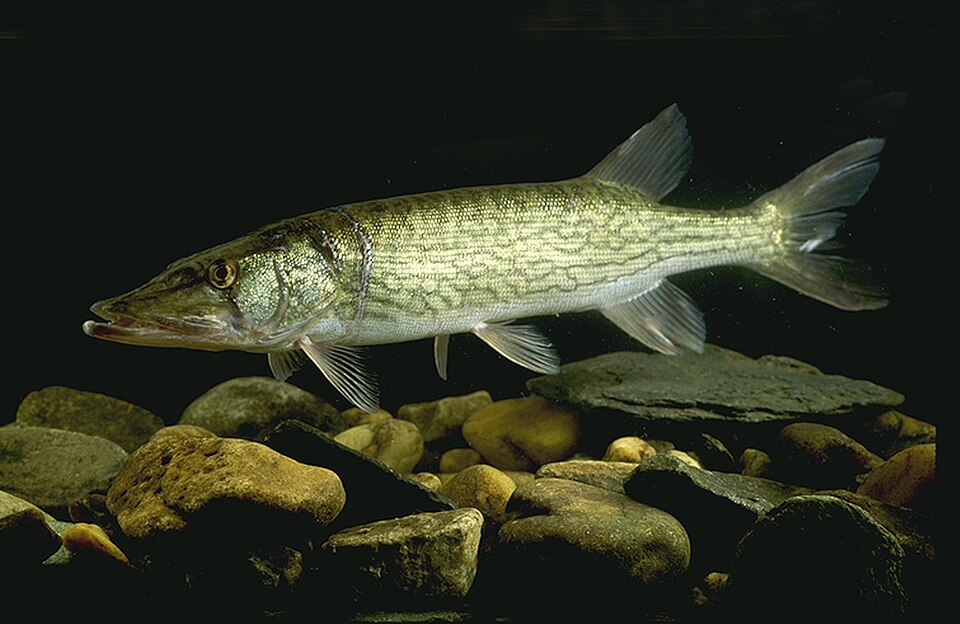
- Look for a chainlike pattern of dark lines on the sides and a dark vertical bar under the eye (New York).
- Fish shallow, weedy water, 2 to 10 feet deep (New York).
- Use a steel or wire leader because of their sharp teeth (New York).
- If fish follow the lure without biting, change the retrieve speed, make it more erratic, or switch lure style or color (New York).
- They are active in winter, so tip-ups and jigging spoons work through the ice (New York).
How to recognize one
- Chain-like markings along the side and a dark vertical bar under the eye, with sharp, needle-like teeth (New York DEC).
- Missouri describes an elongated body with a duckbill-shaped snout, olive or yellowish-brown color with a chainlike pattern of dark lines, and a dorsal fin set far back.
- Average size is 15 to 20 inches and 1 to 2 pounds, with trophy fish over 25 inches (New York).
Look-alikes
- Grass pickerel: Missouri describes a shorter snout and a dusky bar angling down from the eye.
- Northern pike: New York says chain pickerel are related to muskellunge and northern pike.
Side-by-side help: Northern Pike vs Chain Pickerel vs Grass Pickerel
Where they hold
- Shallow, weedy areas of ponds, lakes and rivers, 2 to 10 feet deep. They wait in ambush around vegetation for smaller fish passing by and stay in weedy, shallow water most of the year (New York).
- From a boat, New York suggests starting near the bank and working outward until you find the depth they are holding at.
Seasons and time of day
These notes come from the New York agency page listed at the bottom, and timing shifts by region. It gives no water-temperature numbers.
Best months and time of day
New York says pickerel can be caught any time during the open season, with the best fishing from early May through July. They can be caught any time of day but are often more active early and late in the day.
- From a boat, New York suggests starting near the bank and working outward until you find the depth they are holding at.
Winter: ice fishing
New York says pickerel are active through winter, so ice fishing works. It lists tip-ups baited with minnows set 1 to 3 feet off the bottom, and jigging with spoons, swimming lures, or jigs tipped with a minnow, minnow head or spikes, in 5 to 15 feet of water around remaining weed beds.
- New York says anglers hooking themselves is common when unhooking pickerel, so use long-nose pliers, hemostats or a jaw spreader.
Baits and lures
Lures
Spinnerbaits, jerkbaits, crankbaits, topwater lures, jigs and soft plastics (New York). Single-hook lures such as spinnerbaits or bladed jigs are easier to unhook.
Colors
Bright white, red or yellow often works, though natural colors also do well (New York).
Live bait
3- to 4-inch live minnows hooked under the dorsal fin and fished under a bobber (New York).
- New York says to keep trying different approaches until something works that day.
A starter setup
- Rod: 5.5 to 7 feet, medium or medium-light action, spin casting, spinning or bait casting (New York).
- Line: 8 to 12 pound monofilament with a steel or wire leader to resist their teeth (New York).
If you are releasing a fish
These are general handling tips from Texas Parks & Wildlife. They say nothing about harvest rules: check your state's rules for that.
- Wet your hands, or use a wet rag or glove, before handling a fish.
- Minimize the time the fish is out of the water: no longer than you can hold your breath.
- Use needle-nose pliers, hemostats or a hook remover to take out the hook and protect your hands, and consider barbless hooks.
- If a net is needed, use a rubber-mesh landing net instead of abrasive nylon.
- When fishing in deep water, bring fish in slowly so they can adjust to the changing pressure.
Taking this fishing? Save it to your phone so it opens without a signal.
On iPhone: tap the Share button, then Add to Home Screen.
Sources
- New York State DEC: Chain pickerel
- Missouri Department of Conservation: Pickerel
- Texas Parks & Wildlife: Catch & Release Tips
This page is information only. It reports what the agencies above publish, from different states and years, so local waters can differ. It is not legal advice and does not tell anyone what to keep, catch or eat. Bait, tackle and hook rules vary by state and by water, so confirm with your state fish and wildlife agency. CatchCheck uses AI to identify fish from photos, and the ID can be wrong.