
King vs Spanish Mackerel: How to Tell Them Apart
Identification features from state and provincial wildlife pages. Reviewed October 25, 2026.
What to look for, fish by fish
King mackerel
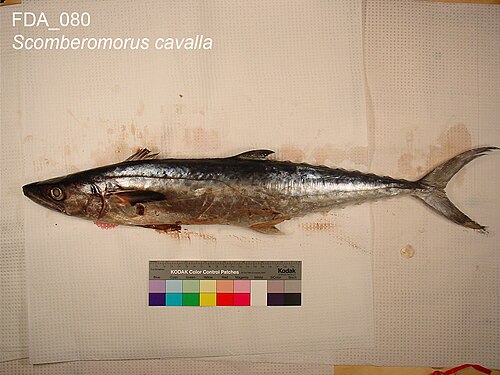

- No black area on the front of the first dorsal fin (North Carolina).
- A lateral line that starts high and dips sharply at the second dorsal fin (North Carolina).
- Faint bronze spots along the sides that may fade as the fish grows. Most catches are 30 to 45 inches, and fish reach 72 inches.
Spanish mackerel
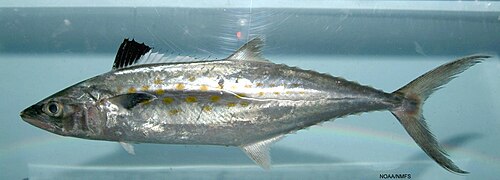

- The front of the first dorsal fin is black (North Carolina).
- Golden yellow spots above and below the lateral line, and a lateral line that curves gently to the tail base.
- Most catches are 14 to 18 inches and 1 to 3 pounds; fish reach 37 inches and 12 pounds.
Feature by feature
First dorsal fin
- King mackerel: No black area at the front.
- Spanish mackerel: Black front.
Lateral line
- King mackerel: Starts high and dips sharply at the second dorsal fin.
- Spanish mackerel: Curves gently to the tail base.
Size of typical catch
- King mackerel: 30 to 45 inches.
- Spanish mackerel: 14 to 18 inches and 1 to 3 pounds.
Good to know
- North Carolina says juvenile Spanish mackerel can be confused with juvenile king mackerel, and links a separate identification guide.
If you are still not sure
Photos can hide the features above: a side view of the whole fish, in good light, shows the most. Your state fish and wildlife agency publishes its own identification guide and can answer species questions for your waters. See also How to identify a fish from a photo.
Taking this fishing? Save it to your phone so it opens without a signal.
On iPhone: tap the Share button, then Add to Home Screen.
Sources
- North Carolina Division of Marine Fisheries: King Mackerel
- North Carolina Division of Marine Fisheries: Spanish Mackerel
This page is information only. It reports identification features the agencies above publish, from different states and years, and features vary with age, season and water. It is not legal advice and does not tell anyone what to keep, catch or eat. CatchCheck uses AI to identify fish from photos, and the ID can be wrong.