
Largemouth vs Smallmouth vs Spotted Bass: How to Tell Them Apart
Identification features from state and provincial wildlife pages. Reviewed October 25, 2026.
What to look for, fish by fish
Largemouth bass
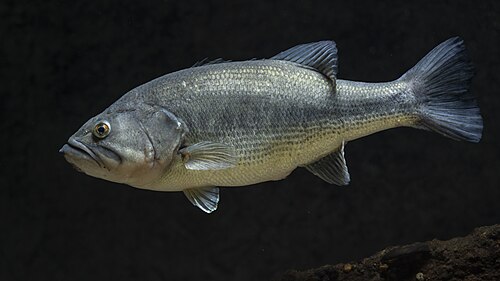

- The upper jaw extends beyond the back edge of the eye (Pennsylvania, Iowa).
- A broad, continuous dark stripe along a green body, which can be unclear in large adults and in murky water (Iowa).
- A deep notch nearly separates the spiny and soft parts of the dorsal fin (Iowa, Kentucky).
- Young fish have a two-colored tail (Iowa).
Smallmouth bass
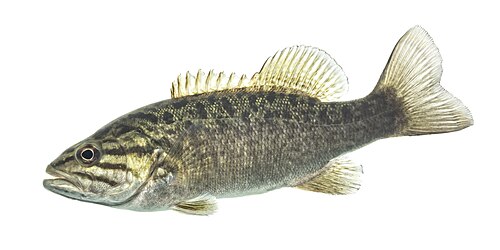

- The upper jaw stops before the back edge of the eye (Pennsylvania); Iowa says about to the rear margin of the eye.
- A brown or bronze back, a white or pale-yellow belly and vertical broken bars on the sides (Pennsylvania). Iowa lists five olive-green bars radiating back from the eye.
- Only a shallow notch between the parts of the dorsal fin (Iowa).
- Young fish have a three-colored tail with a black vertical bar (Iowa).
Spotted bass
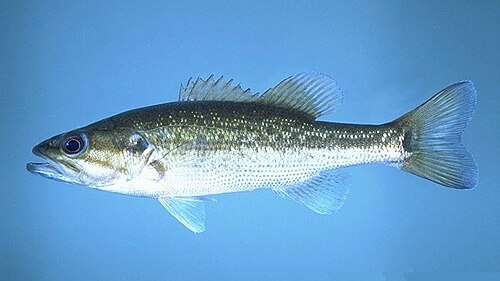

- Horizontal rows of small black spots on the lower sides of adults (Kentucky).
- A shallow notch between the spiny and soft dorsal fins (Kentucky).
- A circular patch of teeth on the tongue, which a largemouth lacks (Kentucky).
- Young fish have a three-colored tail: orange at the base, black in the middle, white at the edge (Kentucky).
Feature by feature
Upper jaw and the eye
- Largemouth: Extends beyond the back edge of the eye (Pennsylvania).
- Smallmouth: Stops before the back edge of the eye (Pennsylvania); about to the rear margin in adults (Iowa).
Markings on the sides
- Largemouth: One broad, continuous dark stripe (Iowa).
- Smallmouth: Vertical broken bars (Pennsylvania); five bars radiating from the eye (Iowa).
- Spotted bass: Rows of small black spots on the lower sides (Kentucky).
Dorsal-fin notch
- Largemouth: Deep notch (Iowa, Kentucky).
- Smallmouth and spotted bass: Shallow notch (Iowa, Kentucky).
Young fish's tail
- Largemouth: Two-colored (Iowa).
- Smallmouth and spotted bass: Three-colored (Iowa). Kentucky describes the spotted bass tail as orange, black and white.
Good to know
- Kentucky says spotted bass look most like largemouth, and that spotted bass are much less common than smallmouth bass in cool, clear upland streams.
- Pennsylvania says smallmouth are a bit smaller and less round from side to side than largemouth.
If you are still not sure
Photos can hide the features above: a side view of the whole fish, in good light, shows the most. Your state fish and wildlife agency publishes its own identification guide and can answer species questions for your waters. See also How to identify a fish from a photo.
Taking this fishing? Save it to your phone so it opens without a signal.
On iPhone: tap the Share button, then Add to Home Screen.
Sources
- Iowa Department of Natural Resources: Largemouth Bass
- Iowa Department of Natural Resources: Smallmouth Bass
- Pennsylvania Fish & Boat Commission: Smallmouth, Largemouth and Spotted Bass
- Kentucky Department of Fish and Wildlife Resources: Spotted Bass
This page is information only. It reports identification features the agencies above publish, from different states and years, and features vary with age, season and water. It is not legal advice and does not tell anyone what to keep, catch or eat. CatchCheck uses AI to identify fish from photos, and the ID can be wrong.