
Lake Trout: How to Catch More of Them
A playbook built from state and provincial wildlife pages. Reviewed October 25, 2026.
Also called: laker, mackinaw, togue, gray trout
Jump to: How to recognize one · Where they hold · Baits and lures · Releasing a fish · Sources
The five-minute version
- After ice-out, fish the shore, shallows and reefs, shallower than 30 feet (Minnesota).
- In summer go deep: deeper than 40 feet, with downriggers, wire line or bottom bouncers, or vertical jigging (Minnesota).
- In September they return to shallows and reefs near rocky shorelines as the water cools (Minnesota).
- Dawn and dusk are best in spring (Minnesota); Ontario says summer trout bite best in the morning when the surface is calm.
- Use heavier tackle in summer: wire line, lead-core line, downriggers or diving planers (Ontario).
How to recognize one
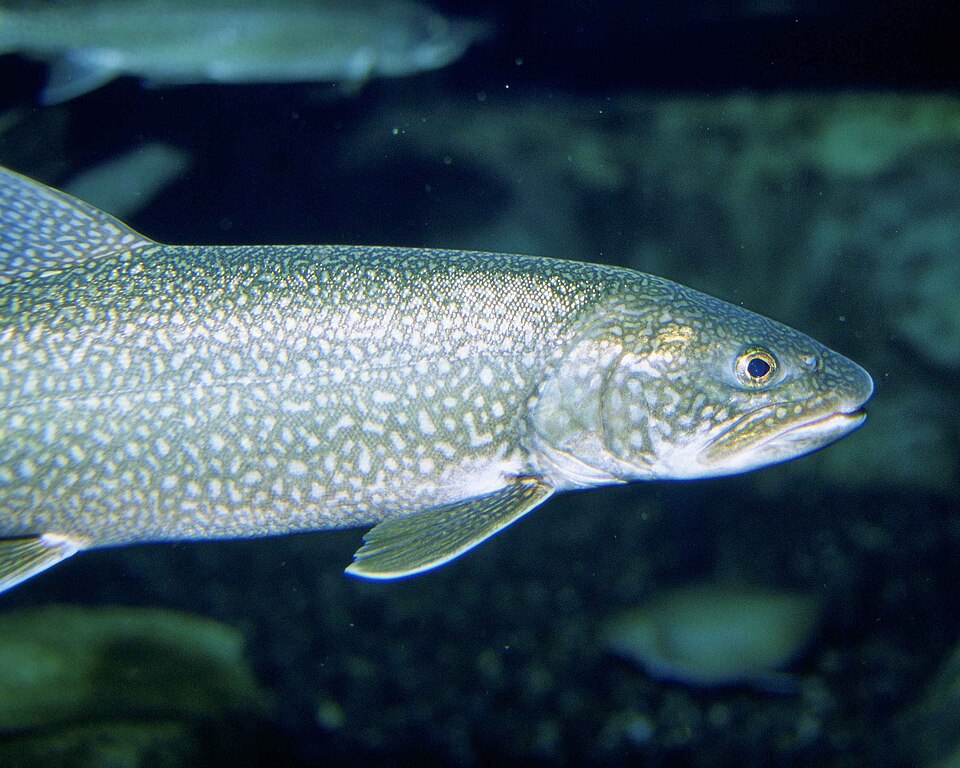
- A green, gray, brown or almost black back with lighter sides and a white belly (Ontario).
- Light, wormlike markings and spots on a dark background, none of them red.
- A white leading edge on the lower fins with no black line, and a deeply forked tail.
Look-alikes
- Brook trout and splake: Ontario says lake trout are commonly confused with splake and brook trout, which have their own pages. Check your state agency's fish-ID guide when unsure.
Side-by-side help: Rainbow vs Brown vs Brook vs Lake Trout
Where they hold
- Lakes at least 15 metres (50 feet) deep: Lake Ontario, Lake Huron, Lake Superior and deep, cold Canadian Shield lakes (Ontario).
- Minnesota's top native fisheries are in the Boundary Waters Canoe Area Wilderness.
How the seasons change where they are
These notes come from the Minnesota and Ontario agency pages listed at the bottom, and timing shifts by region. Neither gives water-temperature numbers.
Spring after ice-out: shallow
Minnesota says fish are in shoreline shallows and reefs until the water warms in early summer, and to focus on depths shallower than 30 feet. Ontario says fish are near the surface just after ice-out and move deeper as the water warms, and some feed aggressively before dark.
- Minnesota lists dead ciscoes fished on the bottom, or live minnows suspended under a float.
- Minnesota lists trolled spinners tipped with minnows, white bucktail jigs, crankbaits and flashy spoons, with medium-weight spinning gear at dawn or dusk.
Summer: cool, deep water
Minnesota says lake trout go to cool, deep water as the surface warms, deeper than 40 feet. Ontario says they bite best in the morning when the surface water is calm.
- Minnesota lists trolling with downriggers, wire line or bottom bouncers using crankbaits or spoons, and vertical jigging with spoons or jigs tipped with minnows or cut bait.
- Ontario lists wire line, lead-core line, downriggers and diving planers for summer deep-water gear, and still-fishing with large dead minnows in deep water.
September: back to the shallows
Minnesota says spawning urges draw fish into the shallows in September as the water cools.
- Minnesota suggests casting or trolling near reefs and rocky shorelines.
Winter: ice fishing
Minnesota suggests starting at 15 to 40 feet and moving until you get bites, and says the best times of year are May or the winter season.
- Minnesota lists dead ciscoes or live minnows on the bottom, and jigging with ice-fishing jigs or spoons. Ontario lists minnows, lake herring, or jigs with spoons or bait attached.
Baits and lures
Dead or live baitfish
Dead ciscoes on the bottom or live minnows under a float (Minnesota). Ontario lists large live minnows, dead bait and lake herring.
Spoons and plugs
Flashy spoons, crankbaits and plugs, and spinners tipped with minnows (Minnesota, Ontario).
Jigs
White bucktail jigs and jigs tipped with minnows or cut bait (Minnesota).
- Minnesota says to use medium-weight spinning gear in spring.
A starter setup
- Ontario lists a medium-action spinning outfit with 8 pound test line for fish under 10 pounds, and stronger line for trophy fish, which are common in northern waters.
- For summer deep water, Ontario lists wire line, lead-core line, downriggers and diving planers.
If you are releasing a fish
These are general handling tips from Texas Parks & Wildlife. They say nothing about harvest rules: check your state's rules for that.
- Wet your hands, or use a wet rag or glove, before handling a fish.
- Minimize the time the fish is out of the water: no longer than you can hold your breath.
- Use needle-nose pliers, hemostats or a hook remover to take out the hook and protect your hands, and consider barbless hooks.
- If a net is needed, use a rubber-mesh landing net instead of abrasive nylon.
- When fishing in deep water, bring fish in slowly so they can adjust to the changing pressure.
Taking this fishing? Save it to your phone so it opens without a signal.
On iPhone: tap the Share button, then Add to Home Screen.
Sources
- Minnesota Department of Natural Resources: Lake trout tips
- Ontario Ministry of Natural Resources: Lake Trout
- Texas Parks & Wildlife: Catch & Release Tips
This page is information only. It reports what the agencies above publish, from different states and years, so local waters can differ. It is not legal advice and does not tell anyone what to keep, catch or eat. Bait, tackle and hook rules vary by state and by water, so confirm with your state fish and wildlife agency. CatchCheck uses AI to identify fish from photos, and the ID can be wrong.