
Tripletail: How to Catch More of Them
A playbook built from state and provincial wildlife pages. Reviewed October 25, 2026.
Also called: blackfish, buoyfish, black perch, rockfish
Jump to: How to recognize one · Where they hold · Baits and lures · Releasing a fish · Sources
The five-minute version
- Look at buoys, channel markers, pilings, jetties and floating objects (Texas, Alabama).
- Use live shrimp, crabs or small fish with small hooks, similar to what they eat (Texas).
- Large live shrimp or slow-sinking jigs are listed by Alabama.
- A cork or float with live shrimp is described by Alabama.
- They can be shy and slow to strike (Alabama).
How to recognize one
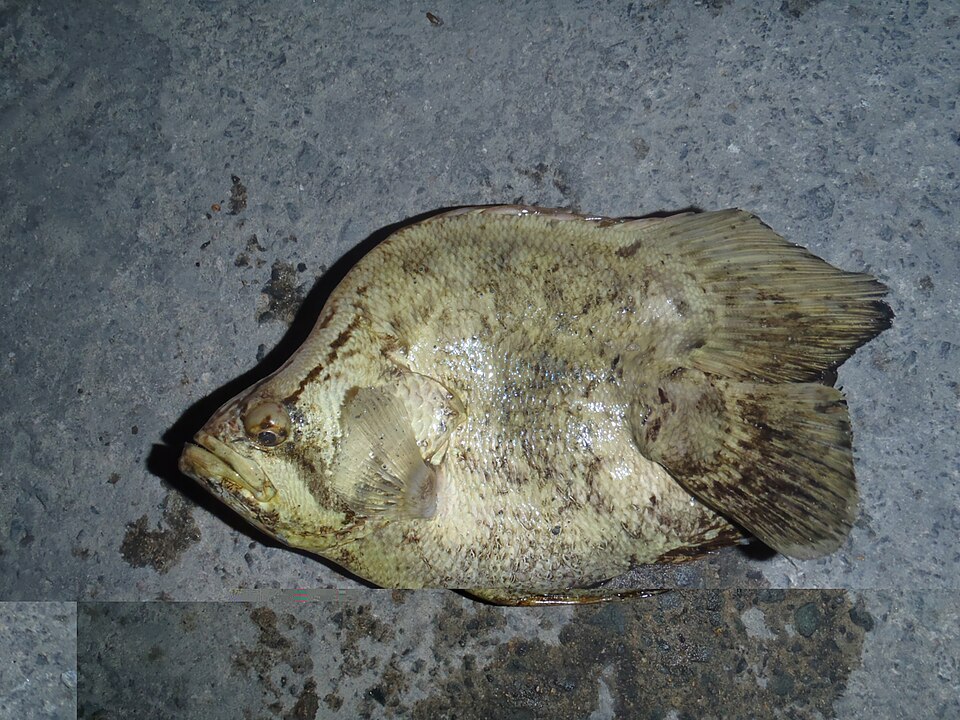
- Deep-bodied, with the soft rays of the dorsal and anal fins set well back toward the tail, which gives a tri-lobed look (Texas).
- Color varies from almost black through reddish-bronze to yellow or mottled (Texas).
- It often floats on its side at the surface, and the color and movement resemble a dead leaf (Texas).
- Texas says they can reach three feet and 30 to 50 pounds but normally run 5 to 15 pounds.
Where they hold
- Texas says tripletails prefer the mouths of rivers, passes and bays opening into the Gulf, and show some indifference to salinity.
- They gather around shipwrecks, buoys, boats, beacons, pilings, jetties and floating objects (Texas).
- Alabama says they are usually caught around buoys, channel markers and other floating obstructions.
Seasons
These notes come from the Texas and Alabama pages listed at the bottom.
Spring through fall
Texas says spawning occurs in spring or early summer, and that the young drift into shallow areas to grow and feed. Alabama lists mid-May through October for the Gulf, with a peak in July.
- Texas says their food consists of live shrimp, crabs and small fish.
Techniques that work
Sight-fish markers
Alabama says they are usually caught around buoys, channel markers and other floating obstructions.
Slow presentations
Alabama says tripletail can be shy and slow to strike, so slow-sinking jigs or bait below a cork are the best baits.
Cane pole with live shrimp
Alabama says a long cane pole with large live shrimp is a most effective method.
Baits and lures
Large live shrimp
Alabama lists large live shrimp. Texas says to use live shrimp, crabs or small fish with small hooks.
Slow-sinking jigs
Alabama lists slow-sinking jigs or bait below a cork.
- Texas says their food is live shrimp, crabs and small fish, so similar baits should be used with small hooks.
If you are releasing a fish
These are general handling tips from Texas Parks & Wildlife. They say nothing about harvest rules: check your state's rules for that.
- Wet your hands, or use a wet rag or glove, before handling a fish.
- Minimize the time the fish is out of the water: no longer than you can hold your breath.
- Use needle-nose pliers, hemostats or a hook remover to take out the hook and protect your hands, and consider barbless hooks.
- If a net is needed, use a rubber-mesh landing net instead of abrasive nylon.
- When fishing in deep water, bring fish in slowly so they can adjust to the changing pressure.
Taking this fishing? Save it to your phone so it opens without a signal.
On iPhone: tap the Share button, then Add to Home Screen.
Sources
- Texas Parks & Wildlife: Tripletail
- Outdoor Alabama: Saltwater Fishing Tips
- Texas Parks & Wildlife: Catch & Release Tips
This page is information only. It reports what the agencies above publish, from different states and years, so local waters can differ. It is not legal advice and does not tell anyone what to keep, catch or eat. Bait, tackle and hook rules vary by state and by water, so confirm with your state fish and wildlife agency. CatchCheck uses AI to identify fish from photos, and the ID can be wrong.