
Yellow Perch vs White Perch vs White Bass: How to Tell Them Apart
Identification features from state and provincial wildlife pages. Reviewed October 25, 2026.
What to look for, fish by fish
Yellow perch
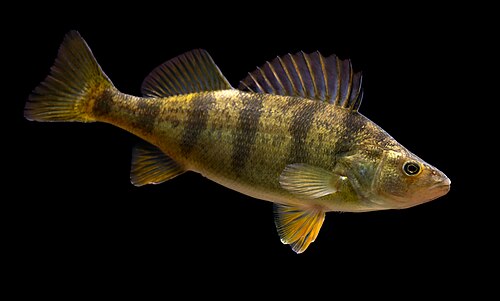

- The sides are bright yellow to brassy-green, with seven dark vertical bars. The belly is lighter and the back is a dark olive-green (Iowa).
- No canine teeth on the jaws or roof of the mouth (Iowa).
- A somewhat hump-backed look, because the head is slightly concave above the eyes (Iowa).
White perch
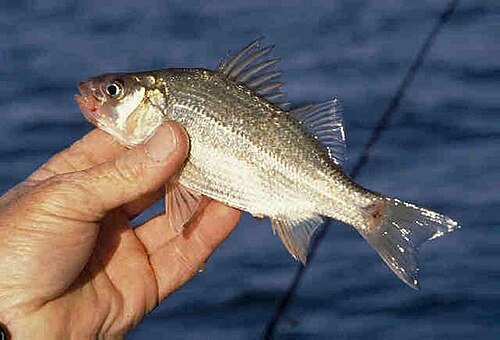

- Silvery-gray to silvery white sides with a white belly, a greenish to brownish back, and no conspicuous marks or stripes (New York, Connecticut).
- Deep-bodied, with a lower jaw that does not protrude much beyond the upper jaw (Connecticut).
- Maryland says white perch frequently have irregular dusky lengthwise lines, small teeth, and an anal fin with three strong spines.
White bass
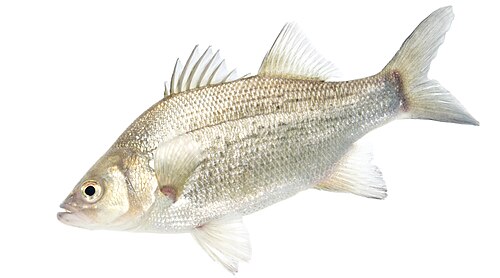

- Silvery, spiny-rayed and elongated, with several dark horizontal streaks along the sides (Missouri).
- The back is blue-gray with silvery reflections, and the sides are silvery with a faint blue-green tinge and several horizontal olive-gray streaks (Missouri).
Feature by feature
Side markings
- Yellow perch: Seven dark vertical bars (Iowa).
- White perch: No conspicuous marks or stripes (Connecticut, New York); some irregular dusky lengthwise lines (Maryland).
- White bass: Several dark horizontal streaks (Missouri).
Color
- Yellow perch: Bright yellow to brassy-green sides, dark olive-green back (Iowa).
- White perch: Silvery white sides, greenish to brownish back (Connecticut).
- White bass: Silvery sides with a faint blue-green tinge, blue-gray back (Missouri).
Good to know
- Connecticut says juvenile white perch may have faint vertical bars and mottling on the sides, and that a 3-inch juvenile looks very much like an adult.
- New York calls the white perch a cousin of the striped bass, and Missouri lists the white bass with the other temperate basses.
If you are still not sure
Photos can hide the features above: a side view of the whole fish, in good light, shows the most. Your state fish and wildlife agency publishes its own identification guide and can answer species questions for your waters. See also How to identify a fish from a photo.
Taking this fishing? Save it to your phone so it opens without a signal.
On iPhone: tap the Share button, then Add to Home Screen.
Sources
- Iowa Department of Natural Resources: Yellow Perch
- Missouri Department of Conservation: Temperate Bass
- Connecticut DEEP: White Perch (Freshwater Fishes of Connecticut, 2009)
- Maryland DNR: Fish Facts, White Perch
- New York DEC: Guide to Capital District Fishing
This page is information only. It reports identification features the agencies above publish, from different states and years, and features vary with age, season and water. It is not legal advice and does not tell anyone what to keep, catch or eat. CatchCheck uses AI to identify fish from photos, and the ID can be wrong.