
Northern Pike vs Chain Pickerel vs Grass Pickerel: How to Tell Them Apart
Identification features from state and provincial wildlife pages. Reviewed October 25, 2026.
What to look for, fish by fish
Northern pike
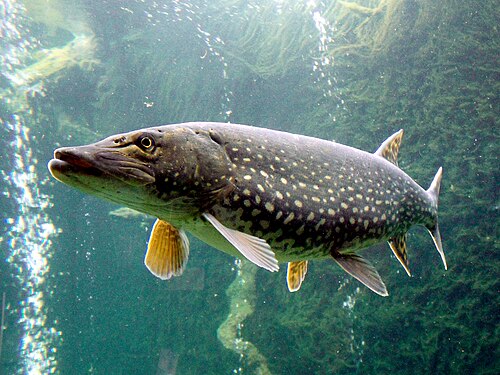

- A bluish-green to gray back and sides carrying irregular rows of light yellow or gold spots (Iowa).
- A long head with large, duck-bill-shaped jaws set with many canine teeth (Iowa).
- The Iowa state record is 25.31 pounds and 45 inches.
Chain pickerel
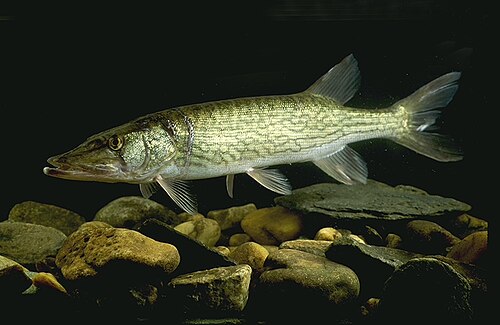

- Chain-like markings along the side and a dark vertical bar under the eye (New York).
- An olive or yellowish-brown body with a chainlike pattern of dark lines, a duckbill-shaped snout and a dorsal fin set far back (Missouri).
- Average 15 to 20 inches and 1 to 2 pounds (New York).
Grass pickerel
- A shorter snout and a dusky bar angling down from the eye (Missouri).
Feature by feature
Markings on the sides
- Northern pike: Irregular rows of light yellow or gold spots (Iowa).
- Chain pickerel: A chainlike pattern of dark lines (Missouri, New York).
Eye and snout
- Chain pickerel: A dark vertical bar under the eye; a duckbill-shaped snout (New York, Missouri).
- Grass pickerel: A shorter snout and a dusky bar angling down from the eye (Missouri).
Typical size
- Chain pickerel: 15 to 20 inches and 1 to 2 pounds, trophy fish over 25 inches (New York).
Good to know
- New York says chain pickerel are related to muskellunge and northern pike and have sharp, needle-like teeth.
- Pennsylvania's pike and musky pages point to an illustration and a reference book rather than giving written features, so use your state agency's ID guide to separate pike from muskellunge.
If you are still not sure
Photos can hide the features above: a side view of the whole fish, in good light, shows the most. Your state fish and wildlife agency publishes its own identification guide and can answer species questions for your waters. See also How to identify a fish from a photo.
Taking this fishing? Save it to your phone so it opens without a signal.
On iPhone: tap the Share button, then Add to Home Screen.
Sources
- Iowa Department of Natural Resources: Northern Pike
- New York State DEC: Chain pickerel
- Missouri Department of Conservation: Pickerel
- Pennsylvania Fish & Boat Commission: Northern Pike
- Pennsylvania Fish & Boat Commission: Muskellunge
This page is information only. It reports identification features the agencies above publish, from different states and years, and features vary with age, season and water. It is not legal advice and does not tell anyone what to keep, catch or eat. CatchCheck uses AI to identify fish from photos, and the ID can be wrong.