
Black Drum: How to Catch More of Them
A playbook built from state and provincial wildlife pages. Reviewed October 25, 2026.
Also called: drum, bull drum
Jump to: How to recognize one · Where they hold · Baits and lures · Releasing a fish · Sources
The five-minute version
- Barbels under the chin and a high-arched back identify them (Texas, North Carolina).
- Cut fish, squid and shrimp, with peeled shrimp tails the most popular bait (Texas).
- Artificial baits are rarely effective because drum feed mainly by smell and touch (Texas, North Carolina).
- Fish the bottom: a bottom rig with a sinker and one or more drops from the bank, the surf or an anchored boat (Texas).
- Let the drum mouth the bait, then wait until it moves off before setting the hook (Texas).
How to recognize one
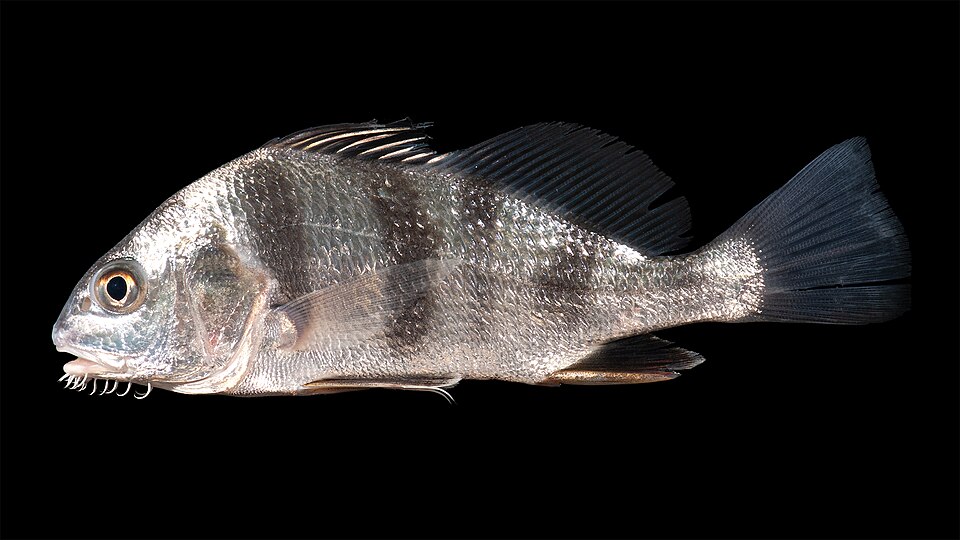
- A chunky, high-backed fish with several barbels under the lower jaw (Texas Parks & Wildlife). North Carolina lists a short, deep body, a high-arched back, a flattish belly and conspicuous chin barbels.
- Young fish have four or five dark vertical bars on their sides that fade with age (Texas); adults are silver with a brassy luster when alive and turn dark gray after death (North Carolina).
- North Carolina says they make a loud grunting noise when excited, and are sometimes confused with sheepshead and spadefish.
Look-alikes
- Sheepshead: North Carolina says black drum are sometimes confused with sheepshead. Sheepshead have vivid black and white bars (Texas).
- Red drum: A red drum has one large black spot on the upper tail base (Texas).
Side-by-side help: Red Drum vs Black Drum vs Sheepshead
Where they hold
- Texas says black drum tolerate more habitat types than any other major Texas food fish, from clear sand flats to muddy sloughs, in very shallow water and in Gulf waters over 100 feet deep.
- North Carolina lists coastal bays, sounds and inlets across a range of salinities.
- They feed on the bottom, finding food with their chin barbels, and can crush clams, mussels, oysters and crabs with throat teeth (North Carolina).
Seasons
These notes come from the Texas and North Carolina agency pages listed at the bottom. Texas gives no water-temperature numbers.
Late winter: the bull runs
Texas says spawning is mostly February through April, with some later spawning in June and July, and that large "bull" drum gather in schools before spawning, often making news in February and March. In cold months, drum of all sizes move to deeper water, channels and the Gulf surf.
- North Carolina says adults form schools and, in spring, migrate to offshore spawning grounds near river and bay mouths.
Summer: shallow-water schools
Texas says in summer, schools of one- to four-pound drum feed in shallow water, including the warm shallow flats of the Laguna Madre.
- Texas says to watch for muddy water patches and drum noodles to locate schools.
Techniques that work
Bottom rig
Place a baited hook on the bottom and wait for the drum to take it. A bottom rig with a sinker and one or more drops is most common for banks, surf and anchored boats (Texas, North Carolina).
Let them mouth it
Let the drum "mouth" the bait, then wait until it moves off before setting the hook with a rod-tip jerk (Texas).
Single drop, no sinker
A single drop rig with no sinker lets bait drift with the current; add split shot if the bait will not sink (Texas).
Baits and lures
Shrimp, squid and cut fish
Cut fish, squid and shrimp, with peeled shrimp tails the most popular (Texas). North Carolina lists cut mullet, menhaden, shrimp and blood worms.
Crab and clams
Larger fish are often taken on clams or pieces of crab (North Carolina).
Artificials
Rarely effective because drum feed mainly by smell and touch. A spoon may work on clear shallow-water schools (Texas).
- Texas says to check local fishing reports, bait stands and tackle shops for current hot spots.
A starter setup
- Rod and reel, trotline, hand line or cane pole; light tackle for small drum and heavy rods with strong backbone for 40-pounders (Texas).
- A strong single hook with line and leader matched to the fish's size (Texas).
If you are releasing a fish
These are general handling tips from Texas Parks & Wildlife. They say nothing about harvest rules: check your state's rules for that.
- Wet your hands, or use a wet rag or glove, before handling a fish.
- Minimize the time the fish is out of the water: no longer than you can hold your breath.
- Use needle-nose pliers, hemostats or a hook remover to take out the hook and protect your hands, and consider barbless hooks.
- If a net is needed, use a rubber-mesh landing net instead of abrasive nylon.
- When fishing in deep water, bring fish in slowly so they can adjust to the changing pressure.
Taking this fishing? Save it to your phone so it opens without a signal.
On iPhone: tap the Share button, then Add to Home Screen.
Sources
- Texas Parks & Wildlife: Black Drum
- North Carolina Division of Marine Fisheries: Black Drum
- Texas Parks & Wildlife: Catch & Release Tips
This page is information only. It reports what the agencies above publish, from different states and years, so local waters can differ. It is not legal advice and does not tell anyone what to keep, catch or eat. Bait, tackle and hook rules vary by state and by water, so confirm with your state fish and wildlife agency. CatchCheck uses AI to identify fish from photos, and the ID can be wrong.