
Albacore Tuna: How to Catch More of Them
A playbook built from state and provincial wildlife pages. Reviewed October 25, 2026.
Also called: albacore, longfin tuna
Jump to: How to recognize one · Where they hold · Baits and lures · Releasing a fish · Sources
The five-minute version
- Head 15 to 200 miles or more offshore from mid-July through September (Oregon).
- Look for clear blue water at 59 degrees F or warmer (Oregon).
- Washington says albacore concentrate near sea surface temperature breaks, where warmer, clearer blue water meets colder green water.
- Troll cedar plugs or diving plugs at 5 knots or faster (Oregon).
- Live anchovies on single hooks are especially productive when a school is near the surface (Washington).
How to recognize one
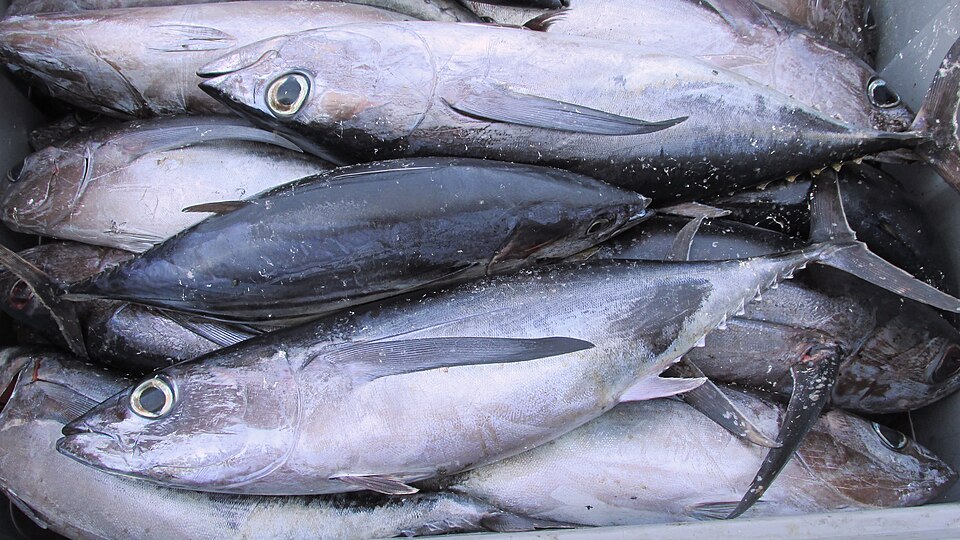
- Dark blue backs, silver sides and bellies, and very long pectoral fins (Oregon).
- Washington says the pectoral fin extends well beyond the front of the anal fin, there are usually 7 to 9 dorsal finlets and 7 to 8 anal finlets, the first dorsal fin is deep yellow, and the caudal fin is white-edged.
- Oregon says albacore caught off the Pacific Coast are generally 21 to 30 inches long, with the largest running about 35 pounds.
Where they hold
- Pelagic fish that spend their lives in the open ocean. Albacore generally show up 15 to 200 miles or more off the Pacific Coast in mid-July and stay through September, usually where surface water temperature is at least 59 degrees F and the water is a distinct clear blue (Oregon).
- Washington says they live in warmer, clearer offshore waters off the West Coast in summer and fall and off Southern California year-round, and are often concentrated near sea surface temperature breaks.
- Washington says recreational anglers typically fish 40 to 100 miles off the Washington coast.
Water temperature and seasons
These notes come from the Oregon and Washington pages listed at the bottom.
Surface water 59°F or warmer, July to October
Oregon says albacore are usually found where surface water temperatures are at least 59 degrees F and the water has a distinct clear blue color. Washington says August and September are the most popular months because albacore are usually more abundant and the weather is normally calmer.
- Washington says trips can last one to three days depending on the distance to the tuna grounds.
Techniques that work
Fast trolling
Troll cedar plugs or diving plugs at 5 knots or faster (Oregon). Washington lists fast trolling with plugs, Rapalas, clones (plastic squid) and leadhead jigs.
Live bait
Washington says live bait fishing with live anchovies on single hooks is especially popular and productive when a tuna school is near the surface. Oregon lists drifting with live or dead bait.
Jigs
Oregon lists casting jigs to jumping schools and dropping metal jigs to fish holding deep. Washington lists vertical jigging with lead and iron jigs.
Baits and lures
Cedar and diving plugs
Oregon lists cedar plugs and diving plugs trolled at 5 knots or faster.
Live anchovies
Washington lists live anchovies on single hooks.
Jigs
Oregon and Washington list metal, lead and iron jigs.
- Washington says albacore off Washington and Oregon feed primarily on Pacific saury and northern anchovy.
- Federal and state agencies manage tuna, so check NOAA Fisheries and your state agency for rules on gear and bait.
If you are releasing a fish
These are general handling tips from Texas Parks & Wildlife. They say nothing about harvest rules: check your state's rules for that.
- Wet your hands, or use a wet rag or glove, before handling a fish.
- Minimize the time the fish is out of the water: no longer than you can hold your breath.
- Use needle-nose pliers, hemostats or a hook remover to take out the hook and protect your hands, and consider barbless hooks.
- If a net is needed, use a rubber-mesh landing net instead of abrasive nylon.
- When fishing in deep water, bring fish in slowly so they can adjust to the changing pressure.
Taking this fishing? Save it to your phone so it opens without a signal.
On iPhone: tap the Share button, then Add to Home Screen.
Sources
- Oregon Department of Fish & Wildlife: Albacore Tuna
- Washington Department of Fish & Wildlife: Albacore Tuna
- Texas Parks & Wildlife: Catch & Release Tips
This page is information only. It reports what the agencies above publish, from different states and years, so local waters can differ. It is not legal advice and does not tell anyone what to keep, catch or eat. Bait, tackle and hook rules vary by state and by water, so confirm with your state fish and wildlife agency. CatchCheck uses AI to identify fish from photos, and the ID can be wrong.