
Tarpon: How to Catch More of Them
A playbook built from state and provincial wildlife pages. Reviewed October 25, 2026.
Also called: silver king, silverking
Jump to: How to recognize one · Where they hold · Baits and lures · Releasing a fish · Sources
The five-minute version
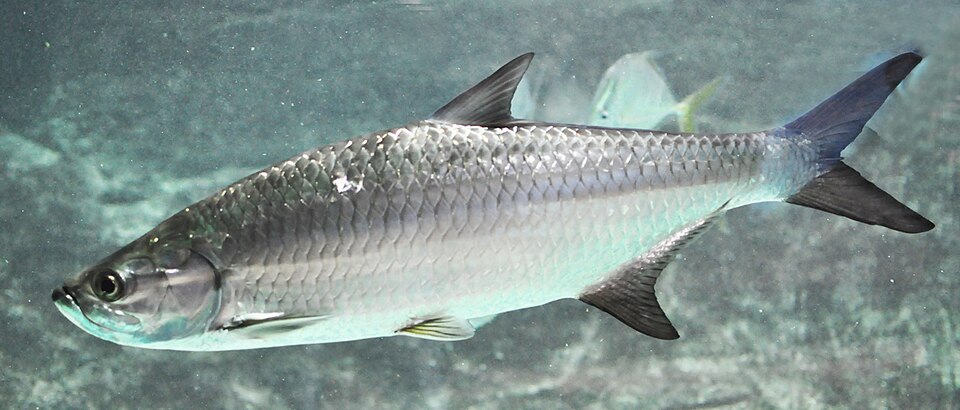
- Recognize them by the large, flat scales up to three inches, the elongated dorsal fin and the large, bony underslung jaw (Texas).
- Adults live in open Gulf waters and can move up larger rivers (Texas).
- Baits and lures listed: trolled spoons and jigs, live pinfish and mullet under a cork, and menhaden for drift fishing (Texas).
- Methods listed: trolling and drift fishing with live bait (Texas).
- Most are caught off the Gulf beachfront, and southern Texas has the most directed tarpon fishing, with guides who specialize in it (Texas).
How to recognize one
- Also called "Silver King," with large, flat scales up to three inches in diameter, an elongated dorsal fin, a falcate anal fin and a large bony underslung jaw (Texas Parks & Wildlife).
- They can exceed 300 pounds, and the Texas record is 229 pounds and 90 inches.
Where they hold
- Adults live in open Gulf waters and may move up larger rivers that empty into the Gulf (Texas).
- Young tarpon 6 to 18 inches use brackish water in marsh channels, and have also been found in river mouths, lakes and bar ditches (Texas).
Techniques that work
Trolling
Texas lists trolling spoons and jigs.
Drift fishing
Drift fishing with live bait such as menhaden (Texas).
Live bait under a cork
Live pinfish and mullet fished under a cork (Texas).
Baits and lures
Spoons and jigs
Trolled spoons and jigs (Texas).
Live bait
Live pinfish and mullet under a cork, and menhaden for drift fishing (Texas).
- Texas says the fight is dramatic, with leaps from the water and body shaking, and that little is known about tarpon spawning activity or growth.
If you are releasing a fish
These are general handling tips from Texas Parks & Wildlife. They say nothing about harvest rules: check your state's rules for that.
- Wet your hands, or use a wet rag or glove, before handling a fish.
- Minimize the time the fish is out of the water: no longer than you can hold your breath.
- Use needle-nose pliers, hemostats or a hook remover to take out the hook and protect your hands, and consider barbless hooks.
- If a net is needed, use a rubber-mesh landing net instead of abrasive nylon.
- When fishing in deep water, bring fish in slowly so they can adjust to the changing pressure.
Taking this fishing? Save it to your phone so it opens without a signal.
On iPhone: tap the Share button, then Add to Home Screen.
Sources
This page is information only. It reports what the agencies above publish, from different states and years, so local waters can differ. It is not legal advice and does not tell anyone what to keep, catch or eat. Bait, tackle and hook rules vary by state and by water, so confirm with your state fish and wildlife agency. CatchCheck uses AI to identify fish from photos, and the ID can be wrong.