
Red Snapper vs Lane Snapper, and Pompano vs Jack Crevalle: How to Tell Them Apart
Identification features from state and provincial wildlife pages. Reviewed October 25, 2026.
What to look for, fish by fish
Red snapper
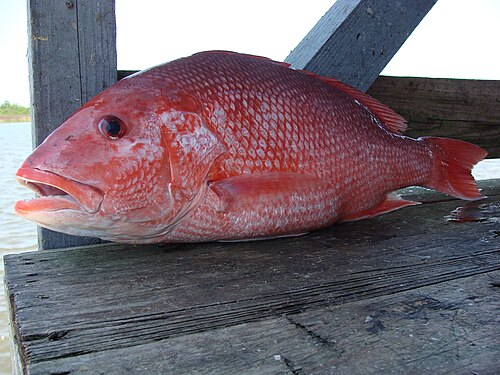

- A deep rosy-red body with a dark fringe around the dorsal and tail fins (Texas).
- An angular anal fin and 14 soft dorsal fin rays (Texas).
Lane snapper
- A rounded anal fin, 12 to 13 soft dorsal rays and 8 narrow yellow stripes (Texas).
Florida pompano
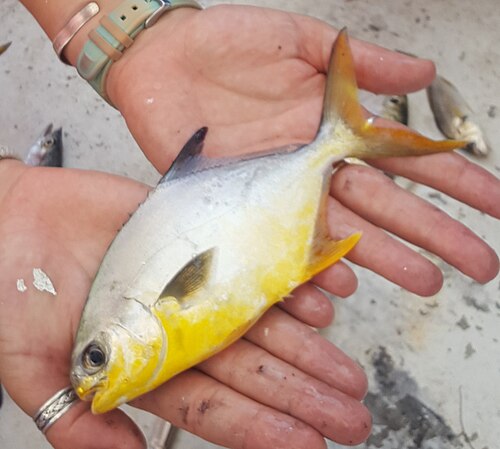

- Grayish or blue on the back, silver on the sides and yellow underneath, with a bluish tint above and in front of the eyes (Texas).
- The side of the tail and caudal peduncle are smooth, which distinguishes it from the similar-looking jack crevalle (Texas).
Jack crevalle
- Texas says the smooth sides of the tail and caudal peduncle on a pompano set it apart from this similar-looking fish.
Feature by feature
Snappers: anal fin and dorsal rays
- Red snapper: Angular anal fin, 14 soft dorsal rays (Texas).
- Lane snapper: Rounded anal fin, 12 to 13 soft dorsal rays, 8 narrow yellow stripes (Texas).
Pompano versus jack crevalle: the tail
- Florida pompano: Smooth sides of the tail and caudal peduncle (Texas).
If you are still not sure
Photos can hide the features above: a side view of the whole fish, in good light, shows the most. Your state fish and wildlife agency publishes its own identification guide and can answer species questions for your waters. See also How to identify a fish from a photo.
Taking this fishing? Save it to your phone so it opens without a signal.
On iPhone: tap the Share button, then Add to Home Screen.
Sources
This page is information only. It reports identification features the agencies above publish, from different states and years, and features vary with age, season and water. It is not legal advice and does not tell anyone what to keep, catch or eat. CatchCheck uses AI to identify fish from photos, and the ID can be wrong.