
Black Rockfish: How to Catch More of Them
A playbook built from state and provincial wildlife pages. Reviewed October 25, 2026.
Also called: black rockfish
Jump to: How to recognize one · Where they hold · Baits and lures · Releasing a fish · Sources
The five-minute version
- Look over rocky reefs, usually shoreward of 180 feet of depth, and around jetties and other structure in estuaries (Oregon).
- Rubber-tailed lead-head jigs and shrimp flies are the common lures (Oregon).
- They also take bait (Oregon).
- Schools can come all the way to the surface (Oregon).
- Alaska says they are often found above pinnacles and in high-current locations over rugged rock.
How to recognize one
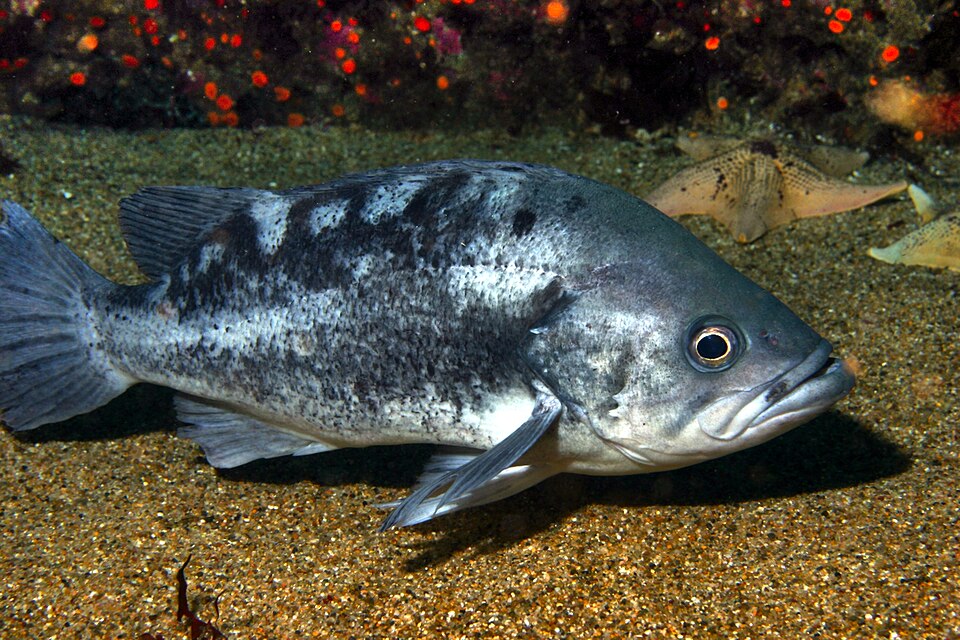
- Dark gray to black on top with a lighter belly, and black spots on the dorsal fins (Oregon).
- A bass-shaped body, a large mouth and a spiny dorsal fin. Alaska says black rockfish are distinguished from similar species like dark and dusky rockfish by the white belly and lack of pores or a knob on the lower jaw.
- Alaska says adults can reach 27.6 inches and 11 pounds, and Oregon says up to 25 inches.
Look-alikes
- Dark and dusky rockfish: Alaska says black rockfish are distinguished from dark and dusky rockfish by the white belly and lack of pores or a knob on the lower jaw.
Where they hold
- Found over rocky reefs most typically shoreward of 180 feet of depth, and common along jetties and other structure in estuaries. Schools occasionally come all the way to the surface (Oregon).
- Alaska says they live in water above the continental shelf from the surface to depths of 366 meters but usually shallower than 150 meters, in rugged, rocky habitat often above pinnacles and in high-current locations, and are generally found in large schools in the water column.
- Alaska says they range from the Aleutian Islands to southern California.
Techniques that work
Jig near the bottom
Oregon says rockfish readily take both bait and lures, and that common lures are rubber-tailed lead-head jigs and shrimp flies.
Baits and lures
Rubber-tailed lead-head jigs
Oregon lists rubber-tailed lead-head jigs.
Shrimp flies
Oregon lists shrimp flies.
Bait
Oregon says they readily take bait.
- Oregon says rockfish feed on squid, octopus, krill and other fish.
- Alaska says black rockfish feed in the water column on zooplankton, crab larvae and fish such as herring and sand lance.
If you are releasing a fish
These are general handling tips from Texas Parks & Wildlife. They say nothing about harvest rules: check your state's rules for that.
- Wet your hands, or use a wet rag or glove, before handling a fish.
- Minimize the time the fish is out of the water: no longer than you can hold your breath.
- Use needle-nose pliers, hemostats or a hook remover to take out the hook and protect your hands, and consider barbless hooks.
- If a net is needed, use a rubber-mesh landing net instead of abrasive nylon.
- When fishing in deep water, bring fish in slowly so they can adjust to the changing pressure.
- Alaska says rockfish have venomous spines, though the venom is relatively mild and seldom causes more than minor pain or swelling.
- Alaska says black rockfish often die from barotrauma after being caught because they have no vent on their swim bladder, and that visible signs can include bulging eyes, tight gill membranes or the esophagus pushed out of the mouth.
Taking this fishing? Save it to your phone so it opens without a signal.
On iPhone: tap the Share button, then Add to Home Screen.
Sources
- Oregon Department of Fish & Wildlife: Black Rockfish
- Alaska Department of Fish and Game: Black Rockfish Species Profile
- Texas Parks & Wildlife: Catch & Release Tips
This page is information only. It reports what the agencies above publish, from different states and years, so local waters can differ. It is not legal advice and does not tell anyone what to keep, catch or eat. Bait, tackle and hook rules vary by state and by water, so confirm with your state fish and wildlife agency. CatchCheck uses AI to identify fish from photos, and the ID can be wrong.