
Spotted Seatrout: How to Catch More of Them
A playbook built from state and provincial wildlife pages. Reviewed October 25, 2026.
Also called: speckled trout, speck, specks, gator trout
Jump to: How to recognize one · Where they hold · Baits and lures · Releasing a fish · Sources
The five-minute version
- Look for seagrass, oyster beds and shallow bays in spring and summer (Texas).
- Live shrimp is described as the best bait; popping corks are a staple (Texas).
- In warm weather fish shallow early and late, then deeper drop-offs, channels or oyster reefs in the heat of the day (Texas).
- In very cold weather, try deep rivers, harbors and channels, especially after a norther subsides (Texas).
- Watch for feeding gulls in summer and fall, and for slicks (Texas).
How to recognize one
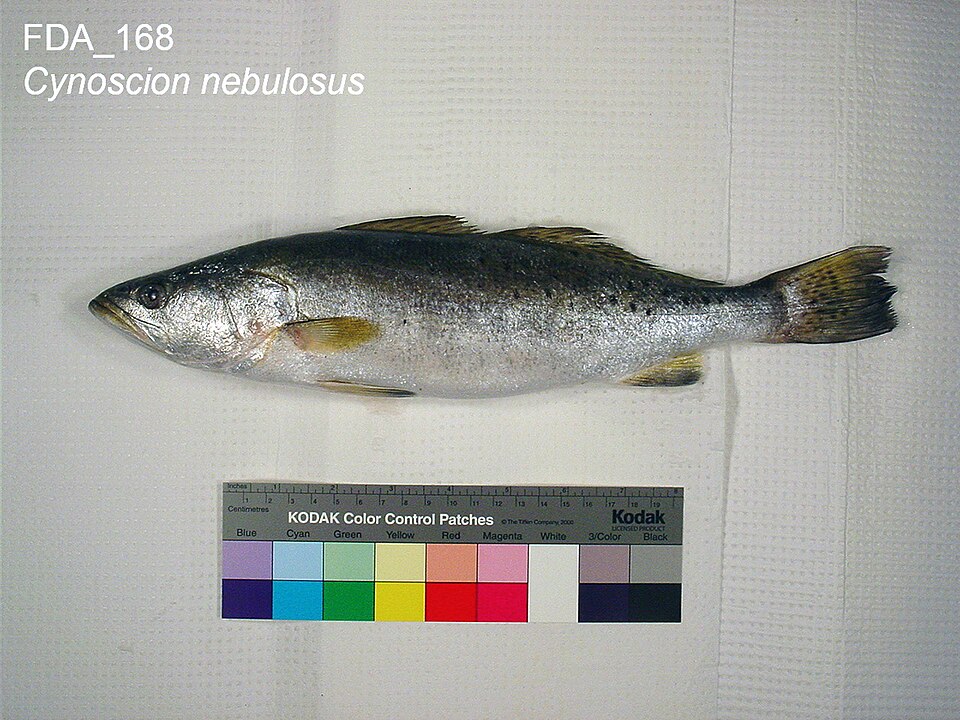
- A dark gray or green back, silvery-white underside, and distinct round spots on the back, fins and tail (Texas Parks & Wildlife).
- A black margin along the edge of the tail, and a soft dorsal fin with no scales.
- One or two prominent canine teeth at the tip of the upper jaw. North Carolina says they are sometimes confused with weakfish.
Side-by-side help: Spotted Seatrout vs Weakfish
Where they hold
- Shallow bays and estuaries with seagrass and oyster beds, and deeper bay water and the Gulf in fall (Texas).
- Deeper rivers and bayous during low rainfall and the first cool weather of fall, and dredged boat harbors and channels (Texas).
- Rivers, estuaries and shallow coastal waters over sandy bottoms, often with seagrass beds, salt marshes and tidal pools of high salinity (North Carolina).
How the seasons and weather change where they are
These notes come mostly from Texas Parks & Wildlife, with North Carolina's agency as a second source. Neither gives water-temperature numbers, and timing shifts by region.
Spring and summer: shallow, with seagrass
Texas says seatrout are most common in shallow bays near seagrass in spring and summer, and return to the shallows of the primary and secondary bays as the water warms in spring. North Carolina says they spawn several times a season from late April to early October, in the deep parts of bays and adjacent grass beds.
- In warm weather, Texas says to fish shallow areas early in the morning and late in the evening, then deeper areas such as drop-offs, channels or oyster reefs during the heat of the day.
- Texas lists floating lures for large trout in shallow water during warm months.
Fall: moving to deeper water
Texas says that as water temperatures decline in fall, seatrout move to deeper bay water and the Gulf. North Carolina says populations north of its coast tend to migrate south for winter.
- Texas says fishlike lures are better in cooler months, especially fished slowly in cold weather.
Cold weather: deep rivers, harbors and channels
Texas says that in very cold weather you can try deep rivers, harbors and channels, especially after a "norther" subsides and skies clear. North Carolina says a cold snap can kill seatrout.
- Texas says moderate weather lets fish stay in the shallows for more of the day.
Techniques that work
Popping cork rig
Pop the cork periodically to simulate live action, and vary the retrieve, popping frequency and bait depth (Texas). North Carolina lists shrimp and minnows suspended from a float.
Free-shrimping
Remove the cork and use a very small sinker. Texas says it is effective when drift fishing or in strong tidal flow.
Bottom rig
Use a conventional bottom rig when fish are feeding near the bottom (Texas).
Find the signs
Texas lists fishing under feeding gulls in summer and fall, and watching for slicks, which it says can be smelled and resemble watermelon or newly mown grass.
Baits and lures
Live shrimp
Texas calls live shrimp the best bait. Live mullet, pinfish and dead shrimp can also work.
Jigs
Hot pink, root beer, dark red and white are listed as good colors, and worm jigs work under a small popping cork on grassy flats (Texas).
Spoons
Silver is probably the best color, especially in warmer months, and a bucktail trailed 12 to 18 inches behind the spoon is often successful (Texas).
Scented artificials
North Carolina lists artificially scented lures as popular.
Fishlike and floating lures
Fishlike lures in cooler months, fished slowly in cold weather, and floating lures for large trout in shallow water in warm months (Texas).
- Texas says most fish caught are in the 2 to 3 pound range.
A starter setup
- Light to medium action rod and reel (Texas), and light to medium spinning tackle (North Carolina).
- Texas says to use saltwater-rated equipment because of the corrosive nature of sea water.
If you are releasing a fish
These are general handling tips from Texas Parks & Wildlife. They say nothing about harvest rules: check your state's rules for that.
- Wet your hands, or use a wet rag or glove, before handling a fish.
- Minimize the time the fish is out of the water: no longer than you can hold your breath.
- Use needle-nose pliers, hemostats or a hook remover to take out the hook and protect your hands, and consider barbless hooks.
- If a net is needed, use a rubber-mesh landing net instead of abrasive nylon.
- When fishing in deep water, bring fish in slowly so they can adjust to the changing pressure.
Taking this fishing? Save it to your phone so it opens without a signal.
On iPhone: tap the Share button, then Add to Home Screen.
Sources
- Texas Parks & Wildlife: Spotted Seatrout
- North Carolina Division of Marine Fisheries: Spotted Seatrout
- Texas Parks & Wildlife: Catch & Release Tips
This page is information only. It reports what the agencies above publish, from different states and years, so local waters can differ. It is not legal advice and does not tell anyone what to keep, catch or eat. Bait, tackle and hook rules vary by state and by water, so confirm with your state fish and wildlife agency. CatchCheck uses AI to identify fish from photos, and the ID can be wrong.