
Channel Catfish: How to Catch More of Them
A playbook built from state and provincial wildlife pages. Reviewed October 25, 2026.
Also called: channel cat, spotted cat, fiddler
Jump to: How to recognize one · Where they hold · Baits and lures · Releasing a fish · Sources
The five-minute version
- Fish the bottom near cover: snags, rocks, riprap, cut banks, and the heads of pools.
- Dusk and night are prime time. Dam riprap fishing is also listed for morning and evening (Oklahoma).
- Match bait size to fish size: small baits for small fish, big baits like dead bluegill or live chubs for big ones (Iowa).
- Rising water tends to bring food and more active fish; falling water slows them (Iowa).
- A simple setup works: a slip sinker rig on 10 pound line is the standard in Iowa and Pennsylvania.
How to recognize one
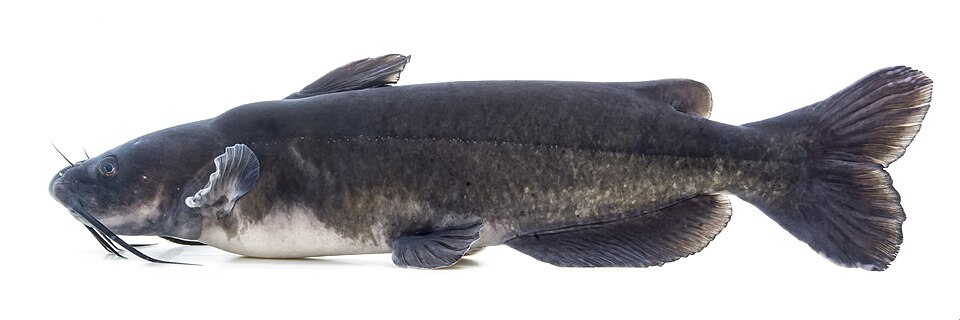
- A deeply forked tail, black spots on the back and sides, and a gray to slate-blue body, often olive with a yellow sheen (North Carolina).
- A scaleless body with eight barbels around the mouth.
Look-alikes
- Blue catfish: North Carolina says to check the anal fin: channel catfish have a rounded anal fin with 24 to 29 rays, blue catfish a straight outer edge with 30 to 36 rays. Oklahoma also notes the straight bottom edge on blues.
- Flathead catfish: No forked tail, a broad flat head, and a lower jaw that sticks out past the upper (North Carolina, Oklahoma).
Side-by-side help: Channel vs Blue vs Flathead Catfish (and Bullheads)
Where they hold
- Native to the Mississippi basin and now across most of the U.S.: ponds, streams, rivers, lakes and reservoirs (North Carolina). Pennsylvania says anything from clear, deep rivers to muddy ponds and lakes.
- Streams and rivers: riffles above pools, cut banks, snags and rocks (Iowa). On large rivers, snags and log jams, wing dams and riprap shorelines.
- Lakes: streams entering the upper ends, timber, rock-protected shorelines and drop-offs, staying above the layer where lakes stratify, which Iowa places 10 to 15 feet below the surface.
- Large reservoirs: shallow, warm upper-end mudflats in spring, then schools of shad along channel edges in summer (Iowa). Oklahoma lists dam riprap and creek channels.
How the seasons change where they are
These notes come from the Iowa, Missouri, North Carolina and Oklahoma agency pages listed at the bottom, and timing shifts by region.
Late winter and early spring: water below 60°F
Iowa says catfish can be caught under ice, but feeding picks up once water reaches about 40°F. At ice-out it suggests cut bait or dead minnows, and says half-rotten fish bait works best when water is below 60°F. Oklahoma lists late April into May for pre-spawn feeding along dam riprap.
- North Carolina lists April, May, September and October as the best months to fish.
Spawn: late May through June
Missouri says larger fish spawn from late May through June along rock riprap shorelines, and that fishing these shorelines is good when water reaches 65°F. Iowa says males guard nests in rocky cavities in early June, so strikes are aggressive. Oklahoma gives late May into July for spawning.
- Iowa suggests targeting rocky shorelines with cavities during the spawn.
Summer: warm water, night feeding
Iowa says many anglers switch to prepared baits when water reaches 70°F or above, and that prepared bait works best for small to pan-sized fish from June through August. North Carolina says fish feed mostly at night, and Oklahoma says activity is much higher in low light and overnight.
- Oklahoma says dam riprap fishing is productive in the morning, evening and overnight in spring, summer and fall.
Late fall: deeper and less aggressive
Iowa says that in late fall, catfish move into the deepest holes to overwinter and are less aggressive, so it suggests cut bait or nightcrawlers near the bottom.
- Iowa suggests cut bait or nightcrawlers fished near the bottom.
Techniques that work
Slip sinker rig
Iowa suggests a slip sinker rig with the lightest weight needed, so the fish does not feel resistance and drop the bait. Pennsylvania lists a single or treble hook on a slip rig or sliding sinker rig.
Circle hooks, patient hookset
With live or cut bait on circle hooks, Iowa says to slowly pull back when the rod doubles over rather than setting the hook.
Bobber along cover
Iowa says bobber rigs work well along riprap, stumps and snags. Oklahoma suggests a worm under a bobber for lots of small to medium fish along riprap, or bait 3 to 5 feet under a large bobber.
Deep-diving crankbaits
North Carolina says to fish deep-diving crankbaits slowly along the bottom.
Watch the water level
Iowa says rising water tends to bring food into the river and increases activity, while falling water slows catfish down.
Baits and lures
Stink and prepared baits
North Carolina lists cut fish, chicken livers, cheese, shrimp and crayfish-blood baits. Iowa says to use sponges or plastic worms with soft cheese baits.
Cut bait and livers
Chicken or beef liver, cut bait and minnows on the bottom (Pennsylvania). Iowa lists chicken or fish guts, cut bait and nightcrawlers.
Live bait
Nightcrawlers, leeches, crawdads, grasshoppers, water dogs, and live and dead minnows (Iowa). Oklahoma lists worms, punch bait, hotdogs, live sunfish and shad.
Big fish, big baits
Iowa says small catfish under 14 inches eat mostly bottom invertebrates and that fish make up most of the diet after 16 inches. For bigger catfish it suggests dead bluegill, live chubs, water dogs, crayfish or frogs.
Lures
Spoons and occasionally spinners (North Carolina), and spinners or jigs tipped with a minnow or nightcrawler (Pennsylvania).
- Oklahoma says channel catfish are more likely than blue or flathead catfish to take non-live or non-natural baits.
A starter setup
- Line: 10 pound test (Iowa, Pennsylvania). Iowa says to go heavier than light line because the bait sits near the bottom and snags are common.
- Hook: size 4 (Pennsylvania). Iowa suggests circle hooks with live or cut bait.
- Rod: Iowa says stream anglers often prefer 6 to 8 feet and lake anglers shorter rods; match the reel to the size of fish.
If you are releasing a fish
These are general handling tips from Texas Parks & Wildlife. They say nothing about harvest rules: check your state's rules for that.
- Wet your hands, or use a wet rag or glove, before handling a fish.
- Minimize the time the fish is out of the water: no longer than you can hold your breath.
- Use needle-nose pliers, hemostats or a hook remover to take out the hook and protect your hands, and consider barbless hooks.
- If a net is needed, use a rubber-mesh landing net instead of abrasive nylon.
- When fishing in deep water, bring fish in slowly so they can adjust to the changing pressure.
Taking this fishing? Save it to your phone so it opens without a signal.
On iPhone: tap the Share button, then Add to Home Screen.
Sources
- North Carolina Wildlife Resources Commission: Channel Catfish
- Iowa Department of Natural Resources: Catfish Fishing Tips
- Missouri Department of Conservation: Catfish tips for fishing
- Oklahoma Department of Wildlife Conservation: Catfish angler guide
- Pennsylvania Fish & Boat Commission: All About Channel Catfish
- Texas Parks & Wildlife: Catch & Release Tips
This page is information only. It reports what the agencies above publish, from different states and years, so local waters can differ. It is not legal advice and does not tell anyone what to keep, catch or eat. Bait, tackle and hook rules vary by state and by water, so confirm with your state fish and wildlife agency. CatchCheck uses AI to identify fish from photos, and the ID can be wrong.