
Sauger: How to Catch More of Them
A playbook built from state and provincial wildlife pages. Reviewed October 25, 2026.
Also called: jack salmon, spotted jack, sand pike
Jump to: How to recognize one · Where they hold · Baits and lures · Releasing a fish · Sources
The five-minute version
- Look for dark spots on the leading dorsal fin and no white tip on the lower tail (Minnesota).
- Early spring: below river dams while the fish migrate to spawn (Minnesota).
- Walleye tackle and methods are appropriate (Minnesota).
- Minnow-tipped jigs and live-bait rigs near the bottom are solid open-water choices (Minnesota).
- Ontario lists morning, evening and cloudy days as the best times.
How to recognize one
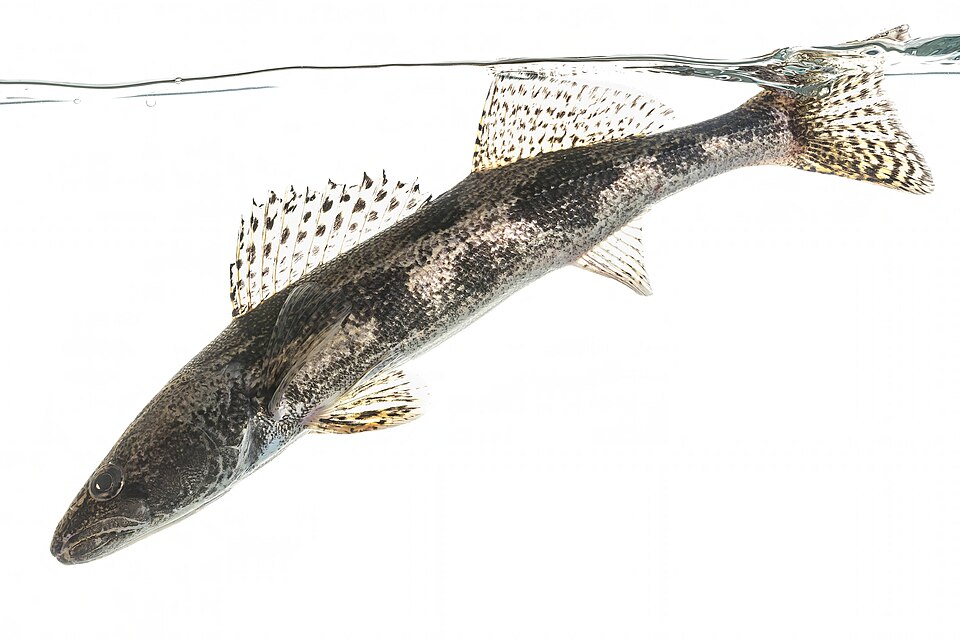
- A torpedo-shaped body with two dorsal fins, dark spots on the leading dorsal fin, irregular dark blotches on the body, and no white tip on the lower tail (Minnesota DNR).
- Ontario lists a grey to brown back with 3 to 4 darker saddles, paler sides with blotches or spots, and a white belly, with separate spiny and soft dorsal fins.
- Adults commonly measure 12 to 15 inches, and fish over 20 inches are considered large (Minnesota).
Look-alikes
- Walleye: Walleye have a white tip on the lower tail fin and no spots on the dorsal fin, and Minnesota says their eyes are less developed for night vision (Minnesota, Ontario).
Side-by-side help: Walleye vs Sauger
Where they hold
- Deeper, murkier water, mostly in rivers (Minnesota). Ontario lists murky lakes and large rivers with bottoms from soft mud to flooded timber, rubble or bedrock, and cover such as weed, wood and rock.
- Missouri says sauger are found mainly in the Mississippi and Missouri rivers and suitable tributaries, favoring flowing water and often swift current.
- In Minnesota, they live mainly in large rivers: the Mississippi, Rainy, Minnesota and Red, plus some large northern lakes (Minnesota).
Seasons
These notes come from the Minnesota and Ontario agency pages listed at the bottom. Neither gives water-temperature numbers.
Spring: below the dams
Minnesota says sauger spawn just after walleye, in slightly deeper water, and gather below Mississippi River dams in early spring while trying to migrate. Ontario says in spring they will take almost any bait or lure.
- Minnesota lists below Mississippi River dams in early spring, Lake Pepin in summer, and Lake of the Woods through the ice.
Summer and fall
Ontario says summer is more challenging, and sauger feed well in fall. Walleye avoid light, so Ontario says the best times are morning and evening and cloudy or overcast days.
- Minnesota suggests targeting deeper, darker areas in rivers and lakes.
Winter: ice fishing
Minnesota describes Lake of the Woods as a strong ice-fishing spot where the bite lasts all day.
- Through the ice, Minnesota lists live minnows or bright, shiny jigging spoons.
Baits and lures
Jigs
Minnow-tipped jigs fished at or near the bottom (Minnesota). Ontario lists jigs tipped with soft plastics, live bait or bucktail.
Plugs and spinners
Minnow-imitating plugs, cast or trolled spinners, and worm harness rigs of spinners and beads (Ontario).
Live bait
Live bait rigs near the bottom (Minnesota). Ontario lists live minnows, earthworms and crayfish.
- Minnesota says walleye tackle and methods are appropriate for sauger.
If you are releasing a fish
These are general handling tips from Texas Parks & Wildlife. They say nothing about harvest rules: check your state's rules for that.
- Wet your hands, or use a wet rag or glove, before handling a fish.
- Minimize the time the fish is out of the water: no longer than you can hold your breath.
- Use needle-nose pliers, hemostats or a hook remover to take out the hook and protect your hands, and consider barbless hooks.
- If a net is needed, use a rubber-mesh landing net instead of abrasive nylon.
- When fishing in deep water, bring fish in slowly so they can adjust to the changing pressure.
Taking this fishing? Save it to your phone so it opens without a signal.
On iPhone: tap the Share button, then Add to Home Screen.
Sources
- Minnesota Department of Natural Resources: Sauger (Volunteer magazine, 2022)
- Ontario Ministry of Natural Resources: Sauger
- Missouri Department of Conservation: Walleye and sauger
- Texas Parks & Wildlife: Catch & Release Tips
This page is information only. It reports what the agencies above publish, from different states and years, so local waters can differ. It is not legal advice and does not tell anyone what to keep, catch or eat. Bait, tackle and hook rules vary by state and by water, so confirm with your state fish and wildlife agency. CatchCheck uses AI to identify fish from photos, and the ID can be wrong.