
Sheepshead: How to Catch More of Them
A playbook built from state and provincial wildlife pages. Reviewed October 25, 2026.
Also called: convict fish, sheepie, sheephead
Jump to: How to recognize one · Where they hold · Baits and lures · Releasing a fish · Sources
The five-minute version
- Vivid black and white bars and prominent front teeth identify them (Texas).
- Fish next to hard structure: pilings, jetties, rock piles, reefs and wrecks (Texas, North Carolina).
- Fiddler crabs, hermit crabs, barnacles, oysters, clams and shrimp are the baits listed.
- Stay alert: Texas says sheepshead are skilled at stealing bait.
- Use hand lines, cane poles or spinning tackle, and handle with care: sharp spines (Texas, North Carolina).
How to recognize one
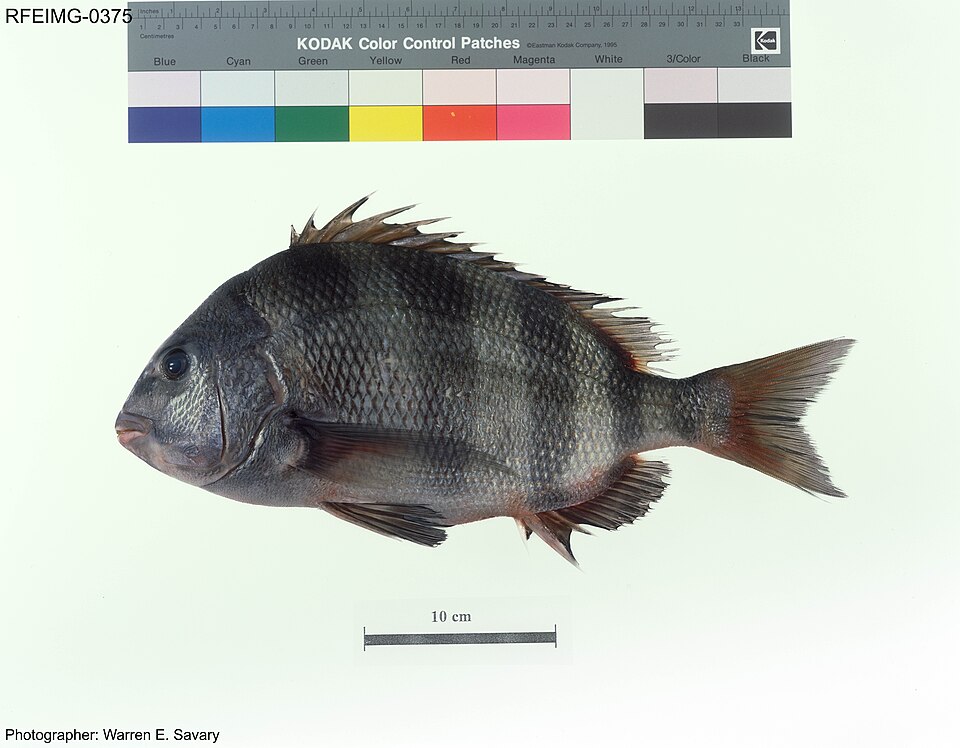
- Vivid black and white bars, which is why it is called the "convict fish," and prominent front teeth that look somewhat like human teeth (Texas Parks & Wildlife).
- Large, sharp spines on the dorsal and anal fins and a sharp-edged gill cover, so handling needs care (Texas, North Carolina).
- A greenish-gray, laterally compressed body with five or six vertical dark bars. Typical size is about 30 inches and 5 to 15 pounds (North Carolina).
Look-alikes
- Black drum and spadefish: North Carolina says sheepshead are often confused with black drum and spadefish.
Side-by-side help: Red Drum vs Black Drum vs Sheepshead
Where they hold
- Adults stay near pilings and rocks, where they use strong front teeth to graze barnacles and small shellfish (Texas).
- North Carolina lists jetties, wharfs, pilings and shipwrecks, especially those covered in barnacles, mussels and oysters.
- Young sheepshead live in shallow, grassy areas, and juveniles are most abundant over grass flats and muddy bottoms (Texas, North Carolina).
Spawning
These notes come from the Texas and North Carolina agency pages listed at the bottom. Neither gives water-temperature numbers.
Late winter and spring: spawning offshore
Texas says spawning occurs in the Gulf near jetties, rock piles and reefs in February and March. North Carolina says adults spawn offshore in spring, then return to nearshore and estuarine waters.
- North Carolina says juveniles leave the grass flats as they grow and gather with adults around jetties, breakwaters, piers and wrecks.
Techniques that work
Fish the pilings
North Carolina suggests fishing next to a piling, or anchoring beside a jetty and letting the tide carry bait across the rocks.
Be quick
Texas says sheepshead are skilled at stealing bait, so anglers should stay alert.
Chum
Crushed oysters or crabs are sometimes used as chum before fishing (North Carolina).
Baits and lures
Crabs
Small fiddler crabs and hermit crabs (Texas); fiddler crabs and other crabs (North Carolina).
Shellfish
Barnacles, oysters and clams (North Carolina).
Shrimp
Shrimp (North Carolina).
- Neither Texas nor North Carolina lists artificial lures for sheepshead.
A starter setup
- Hand lines, cane poles and spinning tackle (North Carolina).
If you are releasing a fish
These are general handling tips from Texas Parks & Wildlife. They say nothing about harvest rules: check your state's rules for that.
- Wet your hands, or use a wet rag or glove, before handling a fish.
- Minimize the time the fish is out of the water: no longer than you can hold your breath.
- Use needle-nose pliers, hemostats or a hook remover to take out the hook and protect your hands, and consider barbless hooks.
- If a net is needed, use a rubber-mesh landing net instead of abrasive nylon.
- When fishing in deep water, bring fish in slowly so they can adjust to the changing pressure.
Taking this fishing? Save it to your phone so it opens without a signal.
On iPhone: tap the Share button, then Add to Home Screen.
Sources
- Texas Parks & Wildlife: Sheepshead
- North Carolina Division of Marine Fisheries: Sheepshead
- Texas Parks & Wildlife: Catch & Release Tips
This page is information only. It reports what the agencies above publish, from different states and years, so local waters can differ. It is not legal advice and does not tell anyone what to keep, catch or eat. Bait, tackle and hook rules vary by state and by water, so confirm with your state fish and wildlife agency. CatchCheck uses AI to identify fish from photos, and the ID can be wrong.