
Red Snapper: How to Catch More of Them
A playbook built from state and provincial wildlife pages. Reviewed October 25, 2026.
Also called: snapper, American red snapper
Jump to: How to recognize one · Where they hold · Baits and lures · Releasing a fish · Sources
The five-minute version
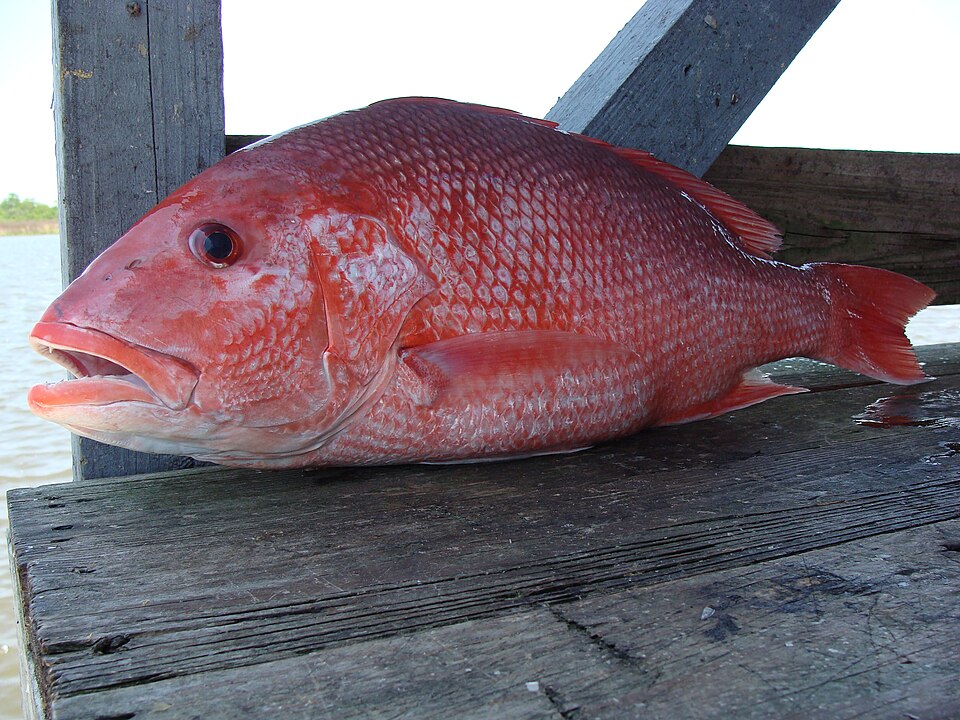
- Look for a deep rosy-red body with a dark fringe around the dorsal and tail fins (Texas).
- Fish reefs, rigs and banks along the Texas coast: adults hold near structure in deeper water (Texas).
- Baits listed: fresh squid or cigar minnows; live pinfish or pigfish catch larger snapper (Texas).
- Gear listed: hand lines, manual reels and electric reels, all with heavy weights and multiple hooks (Texas).
- Spawning runs June through September (Texas).
How to recognize one
- A deep rosy-red body with a dark fringe around the dorsal and tail fins (Texas Parks & Wildlife).
- To tell them from lane snapper: red snapper have an angular anal fin and 14 soft dorsal rays; lane snapper have a rounded anal fin, 12 to 13 soft dorsal rays and 8 narrow yellow stripes (Texas).
Look-alikes
- Lane snapper: A rounded anal fin, 12 to 13 soft dorsal rays and 8 narrow yellow stripes (Texas).
Side-by-side help: Red Snapper vs Lane Snapper, and Pompano vs Jack Crevalle
Where they hold
- Juveniles are found on muddy or sandy bottoms, sometimes inshore. Adults are mostly near structure in deeper water, including artificial reefs, oil rigs and other underwater structure (Texas).
- They feed on crab, squid, shrimp and small fish (Texas).
Baits and lures
Squid and cigar minnows
Fresh squid or cigar minnows (Texas).
Live fish
Live pinfish or pigfish, which Texas says catch larger snapper.
- Texas lists reefs, rigs and banks along the entire Texas coast as places to fish.
A starter setup
- Hand lines, manual reels and electric reels, all fitted with heavy weights and multiple hooks (Texas).
If you are releasing a fish
These are general handling tips from Texas Parks & Wildlife. They say nothing about harvest rules: check your state's rules for that.
- Wet your hands, or use a wet rag or glove, before handling a fish.
- Minimize the time the fish is out of the water: no longer than you can hold your breath.
- Use needle-nose pliers, hemostats or a hook remover to take out the hook and protect your hands, and consider barbless hooks.
- If a net is needed, use a rubber-mesh landing net instead of abrasive nylon.
- When fishing in deep water, bring fish in slowly so they can adjust to the changing pressure.
Taking this fishing? Save it to your phone so it opens without a signal.
On iPhone: tap the Share button, then Add to Home Screen.
Sources
This page is information only. It reports what the agencies above publish, from different states and years, so local waters can differ. It is not legal advice and does not tell anyone what to keep, catch or eat. Bait, tackle and hook rules vary by state and by water, so confirm with your state fish and wildlife agency. CatchCheck uses AI to identify fish from photos, and the ID can be wrong.