
California Halibut: How to Catch More of Them
A playbook built from state and provincial wildlife pages. Reviewed October 25, 2026.
Also called: halibut, CA halibut
Jump to: How to recognize one · Where they hold · Baits and lures · Releasing a fish · Sources
The five-minute version
- Fish near the bottom over sand (Oregon).
- Use live baitfish or squid near the bottom (Oregon).
- Try bounce-balling to get their attention (Oregon).
- Oregon lists 25 to 30 pound class conventional gear, rods with a light tip, and a 40 to 50 pound leader with a 3/0 hook.
- Check the jaw: the upper jaw reaches the rear of the lower eye or beyond (Oregon).
How to recognize one
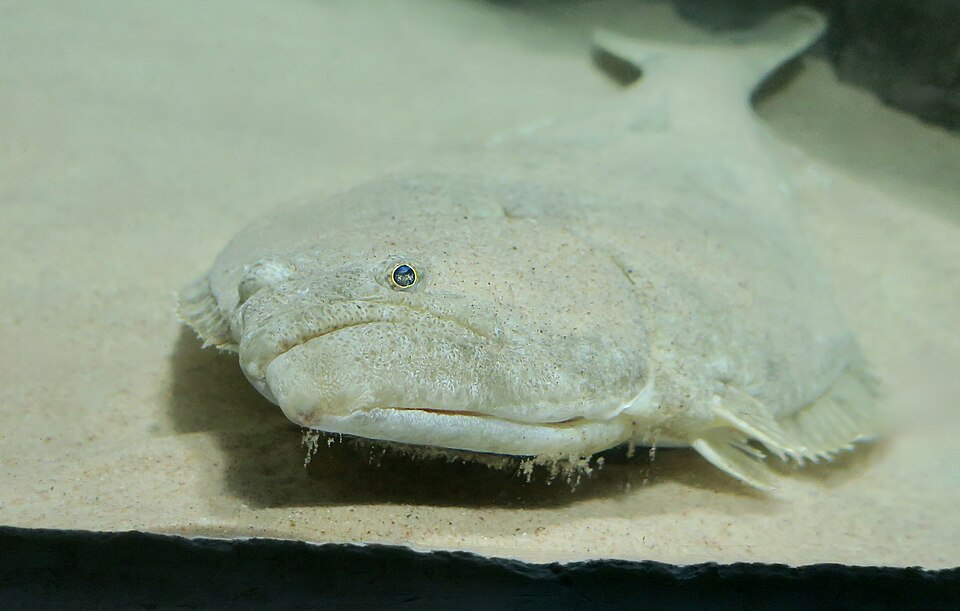
- Usually solid brown to black or mottled with light and dark patches on the eyed side, and white underneath. They change skin color patterns to blend with the bottom (Oregon).
- The eyes are most commonly on the left side but may be on the right (about 60 percent are left-eyed). The body is elongated and oval, not diamond-shaped (Oregon).
- The mouth is large with significant teeth, and the lower jaw extends to the rear of the lower eye or beyond (Oregon).
- The lateral line makes a high arch above the pectoral fin (Oregon). They can reach 5 feet and 72 pounds (Oregon).
Look-alikes
- Pacific halibut: Oregon says Pacific halibut are diamond-shaped and right-eyed, while California halibut can be left- or right-eyed and have an elongated oval body. The upper jaw of a Pacific halibut only extends to the front of the lower eye.
Where they hold
- California halibut spend most of their time buried in sandy bottoms but will gladly chase schools of anchovy (Oregon).
- In Oregon they are rarely seen north of Coos Bay. They are found between the shore and 100 fathoms, but most commonly at depths less than 30 fathoms (Oregon).
Techniques that work
Live bait near the bottom
Using live baitfish and squid near the bottom is the way to go (Oregon).
Bounce-balling
A technique called bounce-balling is another way to get the fish's attention (Oregon).
Baits and lures
Live baitfish
Oregon lists live baitfish fished near the bottom.
Squid
Oregon lists squid fished near the bottom.
- Oregon says California halibut chase schools of anchovy.
A starter setup
- Oregon lists 25 to 30 pound class conventional gear, rods with a light tip, and a 40 to 50 pound leader with a 3/0 hook.
If you are releasing a fish
These are general handling tips from Texas Parks & Wildlife. They say nothing about harvest rules: check your state's rules for that.
- Wet your hands, or use a wet rag or glove, before handling a fish.
- Minimize the time the fish is out of the water: no longer than you can hold your breath.
- Use needle-nose pliers, hemostats or a hook remover to take out the hook and protect your hands, and consider barbless hooks.
- If a net is needed, use a rubber-mesh landing net instead of abrasive nylon.
- When fishing in deep water, bring fish in slowly so they can adjust to the changing pressure.
Taking this fishing? Save it to your phone so it opens without a signal.
On iPhone: tap the Share button, then Add to Home Screen.
Sources
- Oregon Department of Fish & Wildlife: California Halibut
- Oregon Department of Fish & Wildlife: The 10 Most Common Recreationally Caught Flatfish off Oregon
- Texas Parks & Wildlife: Catch & Release Tips
This page is information only. It reports what the agencies above publish, from different states and years, so local waters can differ. It is not legal advice and does not tell anyone what to keep, catch or eat. Bait, tackle and hook rules vary by state and by water, so confirm with your state fish and wildlife agency. CatchCheck uses AI to identify fish from photos, and the ID can be wrong.