
Walleye vs Sauger: How to Tell Them Apart
Identification features from state and provincial wildlife pages. Reviewed October 25, 2026.
What to look for, fish by fish
Walleye
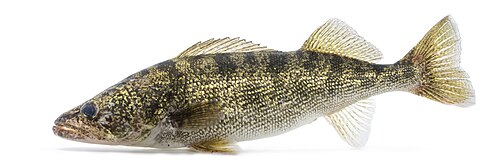

- A silver or milk-white tip on the lower lobe of the tail (Iowa).
- No spots on the front dorsal fin, and one large dark blotch near the base of the last 2 to 3 spines of the rear dorsal fin (Iowa).
- Large, whitish, glossy eyes and strong canine teeth; no distinct dark bars, just brown or black mottling (Iowa).
Sauger
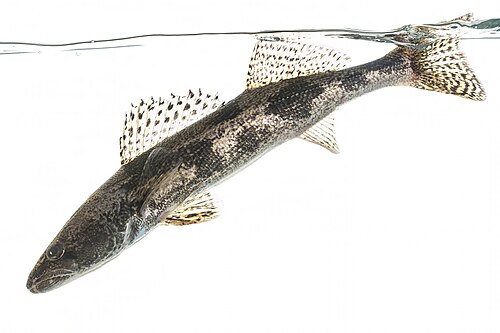

- Dark spots on the leading dorsal fin and no white tip on the lower tail (Minnesota, Ontario).
- Irregular dark blotches on the body (Minnesota); a grey to brown back with 3 to 4 darker saddles (Ontario).
- Adults commonly measure 12 to 15 inches, and fish over 20 inches are considered large (Minnesota).
Feature by feature
Lower tail fin
- Walleye: Silver or milk-white tip (Iowa).
- Sauger: No white tip (Minnesota, Ontario).
Dorsal fin
- Walleye: Front dorsal fin lacks spots; a dark blotch near the base of the rear dorsal fin (Iowa).
- Sauger: Dark spots on the leading dorsal fin; separate spiny and soft dorsal fins (Minnesota, Ontario).
Body markings
- Walleye: Brown or black mottling, no distinct bars (Iowa).
- Sauger: Irregular dark blotches or 3 to 4 saddles (Minnesota, Ontario).
Good to know
- Minnesota says sauger eyes have a reflective layer that aids night vision and is more developed than a walleye's.
- Minnesota says saugers and walleyes can hybridize, creating saugeye.
If you are still not sure
Photos can hide the features above: a side view of the whole fish, in good light, shows the most. Your state fish and wildlife agency publishes its own identification guide and can answer species questions for your waters. See also How to identify a fish from a photo.
Taking this fishing? Save it to your phone so it opens without a signal.
On iPhone: tap the Share button, then Add to Home Screen.
Sources
- Iowa Department of Natural Resources: Walleye
- Minnesota Department of Natural Resources: Sauger (Volunteer magazine, 2022)
- Ontario Ministry of Natural Resources: Sauger
This page is information only. It reports identification features the agencies above publish, from different states and years, and features vary with age, season and water. It is not legal advice and does not tell anyone what to keep, catch or eat. CatchCheck uses AI to identify fish from photos, and the ID can be wrong.